
player
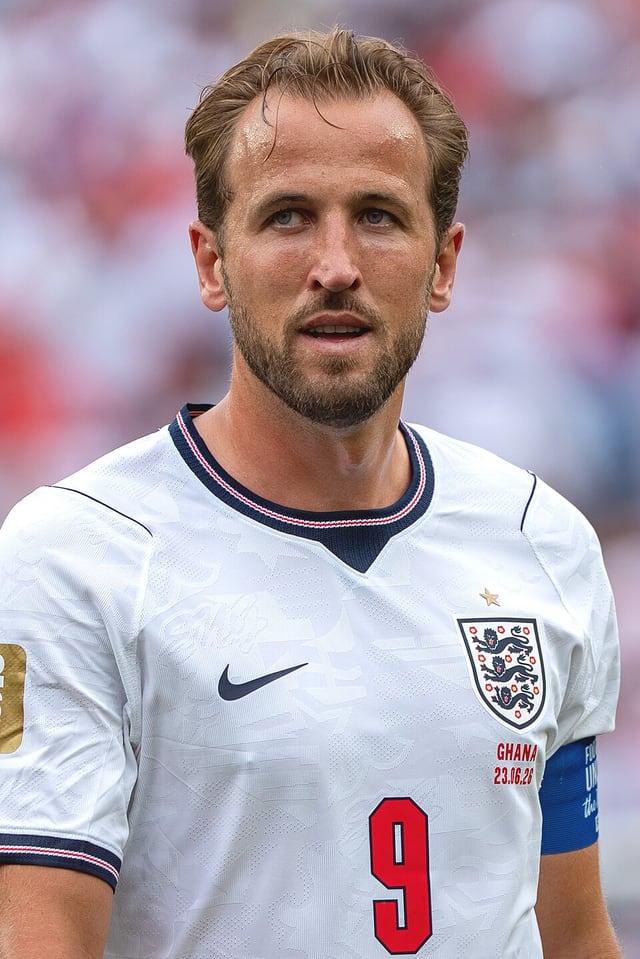
Harry Kane: Bayern, England and the Complete Striker Role
Harry Kane's career through Bayern Munich and England, with his scoring records, link play and the striker skills behind his complete number nine role.
Summary
Kane is dangerous as both the final touch and the pass before it. His scoring earns the headlines, but his complete-striker case depends just as much on how he connects attacks.
Quick facts
- Primary role
- Striker / playmaking number nine
- Current club
- Bayern Munich (checked 22 September 2026)
- National team
- England captain
- England record
- 121 senior caps and 85 goals (checked 22 September 2026)
- 2025/26 Bayern season
- 61 goals in 51 matches; 36 Bundesliga goals
- 2026 World Cup
- Six goals and a bronze medal with England
Current profile
Harry Kane remains Bayern Munich’s number nine and England’s captain as of September 22, 2026. The simple description is goalscorer, but it leaves out too much. Kane can finish an attack, hold it together or start its decisive pass from well outside the penalty area.
That range explains why he sits second in our dated ranking of the best football players in the world right now. His 2025/26 season supplied elite scoring volume, while the World Cup added a different kind of evidence: England used his link play as well as his six goals on the way to third place.
2026 Ballon d’Or case
Kane’s nomination for the 2026 Ballon d’Or rests on a club season of exceptional scoring volume. The Bundesliga’s Golden Shoe review separates his 36 league goals from 61 across Bayern’s competitions. His link play gives those totals a broader tactical context: he can supply the run as well as finish it.
The comparison becomes harder when the rival is a World Cup-winning midfielder or a winger whose biggest contribution is creation. Our Ballon d’Or 2026 ranking weighs that trade-off and keeps the award period separate from new-season form. A prolific September cannot be added to a ballot covering August 3, 2025 to July 19, 2026.
Career route
Kane’s path was not a straight academy-to-star promotion. He developed at Tottenham, then learned senior football through loans at Leyton Orient, Millwall, Norwich City and Leicester City. Those spells did not make him an instant Premier League certainty. They gave him different versions of the striker’s job: competing with centre-backs, protecting the ball and finding shots without a dominant team creating them on demand.
Once established at Tottenham, he became the club’s record scorer with 280 goals in competitive matches. Bayern’s official profile also records 213 Premier League goals at the time of his 2023 transfer. The move to the Bayern Munich club profile changed the league and the surrounding structure, but not the central question. Could the finishing, passing and responsibility travel? Three seasons in, the answer is clear.
A scorer who can make the pass
Kane’s best work begins with his reading of the centre-backs. If they hold their line, he can stay high and attack the box. If one follows him into midfield, he can protect the ball and send a runner into the space that defender has left. If neither steps out, he can turn and pass.
That movement makes him a playmaking number nine rather than a midfielder disguised as a striker. He still wants the attack to end with him near goal. Dropping deep is a way to improve the route back into the box, not an escape from penalty-area responsibility.
His longer passes are especially useful when a winger begins narrow and then accelerates beyond the full-back. Kane often receives with his back to goal, opens his body and plays diagonally into the channel. The action can look separate from his scoring, but the two skills reinforce each other: defenders cannot simply retreat if he is also capable of creating from the pocket in front of them.
How Kane finishes
Kane does not depend on one finish. He can strike early across the goalkeeper, open his foot for the far corner, attack crosses and score penalties. The common feature is preparation. His last adjustment step is usually small enough to keep the shot balanced, even when the pass arrives behind him or a defender is closing the angle.
His heading is built on timing more than constant aerial wrestling. He separates late, finds the blind side and tries to meet the cross before the defender can reset. Around rebounds and cutbacks, he is similarly economical. The value is not spectacular movement for its own sake; it is arriving with enough control to choose a finish.
Bayern evidence
The 2025/26 campaign is the strongest single-season scoring sample in his Bayern career so far. Bayern recorded 61 goals in 51 matches across all competitions, including 36 in the Bundesliga. That league total brought a second European Golden Shoe and a third consecutive Bundesliga top-scorer award. Stuttgart’s Deniz Undav finished second in the league race with 19, the highest total by a German player.
The numbers matter because they came with team success and different attacking partners. Kane could remain central when Bayern established territory, then drop when the team needed an extra passer between the lines. His role was not reduced to waiting for service.
This is also why a club-season profile should not become a list of totals. The more useful point is continuity: the passing habits developed at Tottenham remained part of his game after the move, while Bayern supplied more sustained pressure and more repeated box entries.
England record and World Cup 2026
England Football listed Kane on 121 senior caps and 85 goals when this page was checked on September 22, 2026. Those figures are a dated snapshot, not permanent numbers. The stable part is his status as the men’s senior team’s record scorer and captain.
At the 2026 World Cup, Kane scored six times as England finished third. FIFA’s tournament review places him among six players who reached at least six goals, and the bronze-medal win over France completed the campaign. He also moved to 14 career World Cup goals, the figure used in our all-time World Cup scorers ranking.
The tournament showed both sides of his role. England needed a penalty-box reference, but it also needed someone who could receive under contact and bring advancing midfielders into the attack. That combination supports his place in our best World Cup 2026 players list without pretending the team depended on one player alone.
Kane and the pure box-striker comparison
The Haaland vs Kane comparison is useful because it separates two elite ways of playing centre-forward. Erling Haaland applies extraordinary pressure to the last line through speed, depth and repeated box movement. Kane is more willing to leave that line, connect the next pass and then arrive later.
That does not make one approach automatically better. A team that already creates clean entries may value Haaland’s concentrated penalty-area threat. A team that needs the striker to solve buildup problems can lean more heavily on Kane’s passing. The tactical requirement changes the answer.
Why the complete-striker label fits
Kane’s case is strongest when the parts stay connected. The goals are not separate from the passing, and the passing is not decorative. Defenders must decide whether to follow him, protect the space behind them or give him time to turn. Every choice leaves a different problem.
That is what “complete striker” should mean here: not a claim that he is perfect at every action, but evidence that he can influence the attack before, during and after the final pass.
Sources
Sources checked
FAQ
What position does Harry Kane play?
Kane is a centre-forward who can operate as a traditional number nine or drop into midfield spaces to link play and release runners.
Which club does Harry Kane play for?
As of 22 September 2026, Kane plays for Bayern Munich. He joined the club from Tottenham Hotspur in August 2023.
Why is Harry Kane called a complete striker?
He combines penalty-box finishing, heading and penalty taking with hold-up play, long passing and the vision to create chances after dropping away from centre-backs.
How is Harry Kane different from Erling Haaland?
Kane contributes more often as a connector and passer outside the box, while Haaland's clearest advantage is the repeated depth and penalty-area movement that concentrates his threat near goal.