
player
Luka Modrić: Control That Survived Every Knockout Round
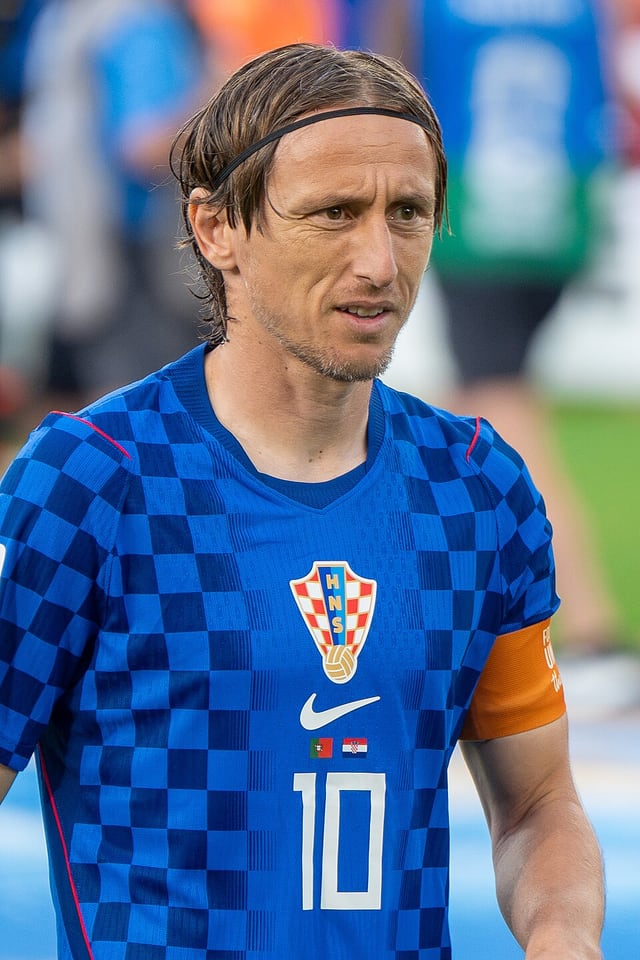
Luka Modrić profile covering Real Madrid's six European Cups, Croatia's World Cup runs, 2018 Ballon d'Or, playing style and ranking case.
Summary
Modrić controlled elite matches through scanning, balance and passing from several heights, giving Real Madrid calm in Europe and Croatia a durable competitive identity.
Quick facts
- Primary role
- Central midfielder and deep creator
- Major clubs
- Dinamo Zagreb, Tottenham, Real Madrid, Milan
- Current club
- AC Milan (contract through June 2027)
- Real Madrid record
- 597 matches / 43 goals
- European Cups
- 6 with Real Madrid
- Individual landmark
- Ballon d'Or 2018
- Croatia landmark
- 200 caps; 2018 World Cup Golden Ball
The route from Zagreb to Madrid’s central reference
Luka Modrić developed at Dinamo Zagreb after formative loans with Zrinjski Mostar and Inter Zaprešić. Four seasons at Tottenham then established him in the Premier League, where his ability to connect phases mattered more than a large scoring total. Real Madrid signed him in 2012.
The move became a 13-season career rather than a short technical experiment. Real Madrid’s current legend profile records 597 matches, 43 goals and 28 trophies through 2025. Official club sources split the global honours into slightly different labels after competition formats changed, so this profile uses the stable total and the clearest landmark: six European Cups.
Modrić joined AC Milan in July 2025. After 37 appearances and two goals in his first season, Milan extended his contract through June 30, 2027, keeping the career active rather than closing the profile at his Real Madrid departure.
Alongside Casemiro and Toni Kroos, Modrić formed a midfield capable of surviving very different European ties. The Real Madrid club profile supplies the broader setting, but his individual value was specific: he could help build the attack, escape pressure and still arrive high enough to create.
Croatia’s captain and World Cup standard
Croatia reached its first World Cup final in 2018 with Modrić as captain and midfield organiser. FIFA awarded him the Golden Ball after a campaign in which his passing, movement and work without the ball shaped the team’s progress through three consecutive knockout matches that required extra time.
The final ended in defeat to France, but the run was not an isolated peak. Croatia finished third at the 2022 World Cup, where Modrić received the Bronze Ball, and later reached the 2023 Nations League final. At the 2026 World Cup, he earned his 200th senior cap against Panama before Croatia lost 2-1 to Portugal in the round of 32. The exact cap total remains live, so this profile records the milestone rather than a changing total.
Those achievements make him a central figure in the greatest World Cup players debate even without a winner’s medal. The argument is built on repeated over-performance with a smaller national talent pool.
Playing style: several jobs inside one match
Modrić could begin a possession near his centre-backs, receive on the half-turn in midfield and later appear near the right edge of the penalty area. His outside-of-the-foot pass became the visual signature, but the less spectacular work made it possible: constant scanning, small changes of angle and an ability to protect the ball without slowing every attack.
He was neither a fixed deep playmaker nor a conventional attacking midfielder. In a midfield three, he adjusted his height around the needs of the other two players. That flexibility helped Real Madrid move between patient possession and direct knockout football without changing personnel.
Six European Cups place him naturally in the greatest Champions League players discussion. The titles are not the whole case; they are evidence that his technique survived repeated tactical changes and the pressure of an unusually long winning cycle.
Why Modrić ranks fifth among all-time midfielders
Our best football midfielders of all time ranking places Modrić fifth. Zidane, Xavi and Iniesta lead in different forms of technical authority, while Lothar Matthäus offers a broader physical and defensive peak. Modrić follows with perhaps the strongest blend of European longevity and national-team elevation among the remaining candidates.
The 2018 Ballon d’Or marks the individual summit, but the ranking case does not depend on one award. It rests on more than a decade of controlling Champions League ties, plus Croatia’s final and semi-final World Cup runs. He repeatedly made difficult matches feel structurally manageable.
Because Modrić was still captaining Croatia at the 2026 World Cup, the page uses seasonal freshness and avoids presenting a final career total. The all-time judgment is already strong; the live details still require regular checking.
Sources
Sources checked
FAQ
What position does Luka Modrić play?
Modrić is a central midfielder who can build from deep, operate as a No. 8 and move into advanced spaces when the game requires it.
How many Champions Leagues did Modrić win with Real Madrid?
He won six European Cups during his Real Madrid career, which ran from 2012 to 2025.
Did Modrić win the World Cup?
No. He captained Croatia to the 2018 final and won that tournament's Golden Ball, helped the team finish third in 2022 and led it to the round of 32 in 2026.