
player
Michel Platini: The No. 10 Who Scored Like a Forward
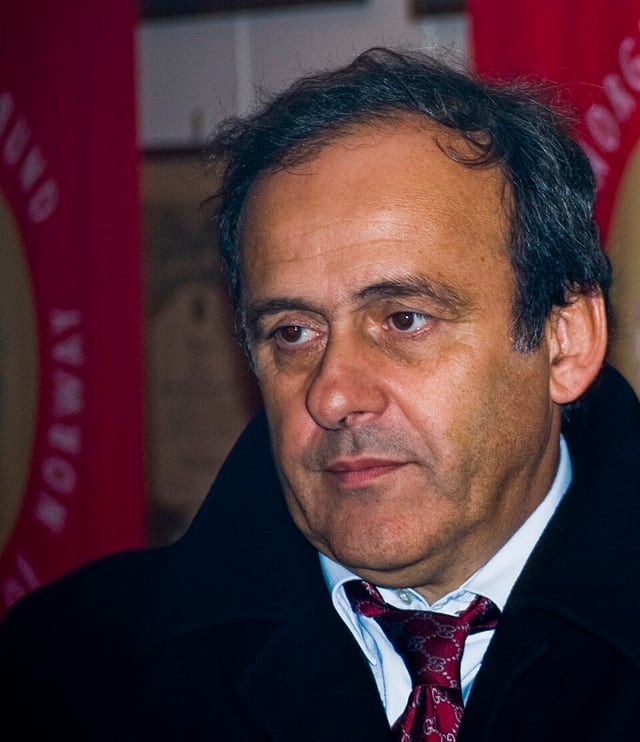
Michel Platini profile covering Juventus, France's EURO 1984 title, three Ballons d'Or, creative style and all-time midfield ranking case.
Summary
Platini combined the vision of an attacking midfielder with elite scoring timing, turning late runs, free-kicks and final passes into France and Juventus victories.
Quick facts
- Primary role
- Attacking midfielder and No. 10
- Major clubs
- Nancy, Saint-Étienne, Juventus
- Juventus record
- 224 appearances / 104 goals
- France record
- 72 caps / 41 goals
- EURO 1984
- Champion and record 9-goal tournament
- Individual landmark
- Three consecutive Ballons d'Or, 1983–1985
From Lorraine to the centre of Juventus
Michel Platini developed at Nancy, won the French league with Saint-Étienne and joined Juventus in 1982. The move placed a French No. 10 inside one of Italy’s most demanding tactical environments. Rather than reducing his attacking freedom, it sharpened the timing of how he used it.
Juventus’s Hall of Fame records 224 appearances and 104 goals across five seasons. That output is unusual for a midfielder, especially one also responsible for organising attacks and supplying teammates. His club honours included two Serie A titles, the Coppa Italia, Cup Winners’ Cup, European Cup, European Super Cup and Intercontinental Cup.
The Juventus club profile gives those trophies their historical frame. Platini’s individual contribution was the link between creation and finishing: the same player could dictate the final pass, arrive for the next one and decide a match from a free-kick.
EURO 1984 and France’s first major title
France hosted EURO 1984 with a gifted midfield that included Alain Giresse, Jean Tigana and Luis Fernández. Platini was its captain, central creator and leading scorer. He scored in all five matches, including consecutive hat-tricks against Belgium and Yugoslavia.
The total reached nine goals, still the record for one men’s EURO final tournament. UEFA notes that those goals accounted for nine of France’s 14 during the finals. The last came in the 2-0 victory over Spain, which delivered the national team’s first major international title.
The French Football Federation records 72 senior caps and 41 goals across Platini’s international career. France also reached the World Cup semi-finals in 1982 and 1986, but EURO 1984 is the clearest expression of his peak because captaincy, creation and scoring all converged in a winning campaign.
Playing style: creation followed by arrival
Platini played with his head up and an unusually broad passing range. He could slow a possession, deliver a long diagonal or combine through the centre, but his most distinctive quality was what happened after releasing the ball. He continued into the penalty area and found spaces usually occupied by a striker.
Set pieces added another scoring route. His free-kicks relied on placement and dip rather than only force, and his calm from penalties made him a reliable final action. The result was a No. 10 who could lead both the creative and scoring burden without becoming a fixed forward.
Three consecutive Ballons d’Or from 1983 to 1985 confirm how sustained that peak was. UEFA’s winners list fixes the sequence, while the Juventus record shows the club production underneath the awards. Platini’s style was elegant, but it was also unusually measurable in goals and trophies.
Why Platini ranks sixth among all-time midfielders
Our best football midfielders of all time ranking places Platini sixth. The five above him offer longer elite runs, broader two-way responsibility or stronger control across entire matches. Platini’s answer is one of the greatest concentrated peaks ever produced by an attacking midfielder.
The argument rests on three connected achievements: Juventus success, three consecutive Ballons d’Or and a EURO campaign that remains statistically unmatched. He was not simply a midfielder who happened to score. His movement and technique made scoring part of how he controlled the attack.
That role distinction matters in an all-time list. Comparing him directly with Xavi or Matthäus by one numerical category would be misleading. Platini belongs this high because he mastered the No. 10’s dual obligation—create and decide—at club and international level, then sustained it long enough to define the middle of the 1980s.
Sources
Sources checked
FAQ
What position did Michel Platini play?
Platini was an attacking midfielder and classic No. 10 who created chances but also entered scoring areas with the timing of a forward.
How many goals did Platini score at EURO 1984?
He scored nine goals in five matches, still the record for a single men's European Championship final tournament.
How many Ballons d'Or did Platini win?
He won three in succession while playing for Juventus, in 1983, 1984 and 1985.