
player
Oleg Blokhin: Dynamo Kyiv's Explosive Forward
Oleg Blokhin's Dynamo Kyiv career, 1975 Ballon d'Or, European trophies, Soviet Union record and place among the greatest left-sided forwards.
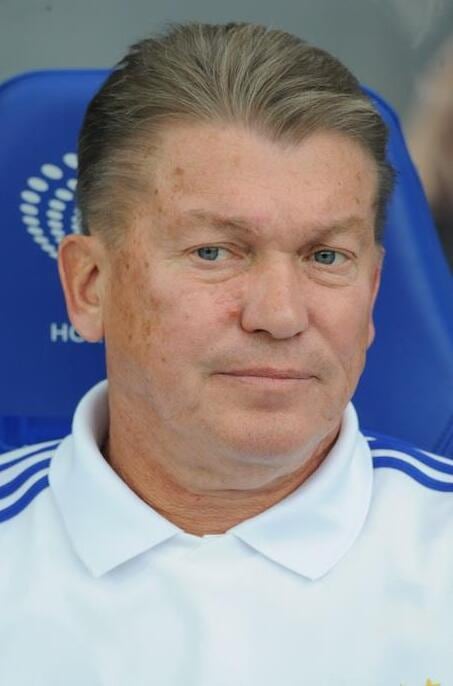
Summary
Blokhin turned pace into direct scoring threat for Dynamo Kyiv, attacking from the left within a disciplined team and deciding its 1975 Super Cup triumph himself.
Quick facts
- Primary role
- Left-sided forward and winger
- Defining club
- Dynamo Kyiv
- National team
- Soviet Union: 112 caps / 42 goals
- Individual peak
- Ballon d'Or 1975
- Cup Winners' Cups
- 1975 and 1986
- Signature European performance
- All three goals against Bayern in the 1975 Super Cup
Dynamo Kyiv’s forward across two European eras
Oleg Blokhin, also widely written as Oleh Blokhin, came through Dynamo Kyiv’s youth system. He became the attacking face of the successful team of the 1970s, and the Ukrainian player remained central to the club’s history in the next decade. Winning the Cup Winners’ Cup in 1975 and 1986 put him in both of Dynamo’s great European campaigns under Valeriy Lobanovskiy.
Dynamo’s records page details his long run of domestic scoring success and repeated individual recognition. The trophies framed a career distinguished by how little space he needed to threaten goal. A defence that looked organised as he received the ball could find itself scrambling after just a few of his strides.
His threat differed from that of a winger whose main task was to cross. Blokhin often finished the attack with his own shot. Starting on the left and running toward goal could serve the team as directly as supplying a centre-forward.
A fast attacker within Lobanovskiy’s system
UEFA describes Lobanovskiy’s method through adaptable players, coordinated pressure and quick attacks after possession had been regained. Blokhin’s speed suited it. The players working and positioning themselves around him gave him freedom to break through, and his runs gave the team’s accurate passes somewhere to go. His threat fitted that collective approach.
His left-sided classification has support beyond a modern formation diagram. In its account of France Football’s 2020 all-time selection, the Football Association of Serbia includes Blokhin among the left-wing nominees. Inclusion cannot settle his rank, but it grounds the role in an established reading of his career.
We judge his winger case by the way he broke through from that side. That does not mean claiming every goal he scored, in every position, as a left-wing goal. Nor must he stay beside the touchline throughout an attack.
The 1975 Super Cup against Bayern
Dynamo’s Cup Winners’ Cup win brought a two-legged Super Cup meeting with Bayern Munich, the European champions, in 1975. Blokhin scored the only goal in Munich after carrying the ball from midfield and breaking through Bayern’s defence. At home in Kyiv, he added two more. Dynamo won the tie 3–0 on aggregate.
UEFA’s competition history identifies his three goals as the decisive contribution. Bayern’s team included some of the leading players of the era, yet Blokhin alone accounted for the entire scoring margin. The tie remains the clearest compact demonstration of his acceleration and finishing at a high level.
He won the 1975 Ballon d’Or after that exceptional European year. By the time Dynamo won the Cup Winners’ Cup again in 1986, he was still at the club. His career had more to support it than a single award-winning season. There is evidence for peak and longevity, and each can be judged separately.
Soviet Union career and the move into coaching
Blokhin’s Soviet Union record stands at 112 appearances and 42 goals in both UEFA’s and Dynamo’s accounts. He appeared at the 1982 and 1986 World Cups and took Olympic bronze medals in 1972 and 1976. In its archive account of the Soviet Union’s 3–0 win against New Zealand in 1982, FIFA singles him out.
The figures belong to the historical national team for which he played. His Ukrainian identity also belongs in the biography. Treating that identity and the Soviet Union playing record as though a single label could describe them both would hide the circumstances in which his career took place.
His playing career ended with spells at Vorwärts Steyr in Austria and Aris Limassol in Cyprus before retirement in 1990. He later reached another World Cup as a coach, leading Ukraine to the quarter-finals in 2006. That was a managerial achievement; it cannot be added to the assessment of his peak as a player.
The left-wing ranking case
Blokhin is fourteenth in our best left wingers of all time ranking. The evidence that matters most is his left-sided forward role across Dynamo’s two European eras, with the extraordinary 1975 Super Cup as its clearest example. His place reflects a scorer who often reached goal by using his pace from a wide starting position.
The historical data is uneven, which a comparison with later players has to allow for. We cannot retrospectively provide modern assist or tracking records, and different career totals can cover different competitions. His football offers the more useful comparison: he had a way to get through a defence again and again, and major European performances show where it worked.
Sources
Sources checked
- UEFA — Blokhin and Dynamo Kyiv's 1975 Super Cup victory
- UEFA — Oleh Blokhin career profile
- FC Dynamo Kyiv — Blokhin's career and international records
- UEFA — Valeriy Lobanovskiy's teams and tactical method
- Football Association of Serbia — France Football's all-time left-wing nominees
- FIFA — Blokhin and the Soviet Union at the 1982 World Cup
FAQ
Was Oleg Blokhin a winger or a striker?
He was a forward with a substantial left-sided role, rather than only a touchline winger. His pace and direct runs toward goal make him eligible for our left-wing ranking.
When did Oleg Blokhin win the Ballon d'Or?
Blokhin won the 1975 Ballon d'Or after Dynamo Kyiv's Cup Winners' Cup triumph and his three goals across the two-legged Super Cup against Bayern Munich.
Which national team did Oleg Blokhin represent?
The Ukrainian-born player represented the Soviet Union. UEFA and Dynamo Kyiv record 112 caps and 42 goals; he played at the 1982 and 1986 World Cups.