
player
Rob Rensenbrink: Anderlecht's Elegant Match Winner
Rob Rensenbrink's Anderlecht career, decisive European finals, Netherlands World Cup appearances and subtle left-wing playing style.
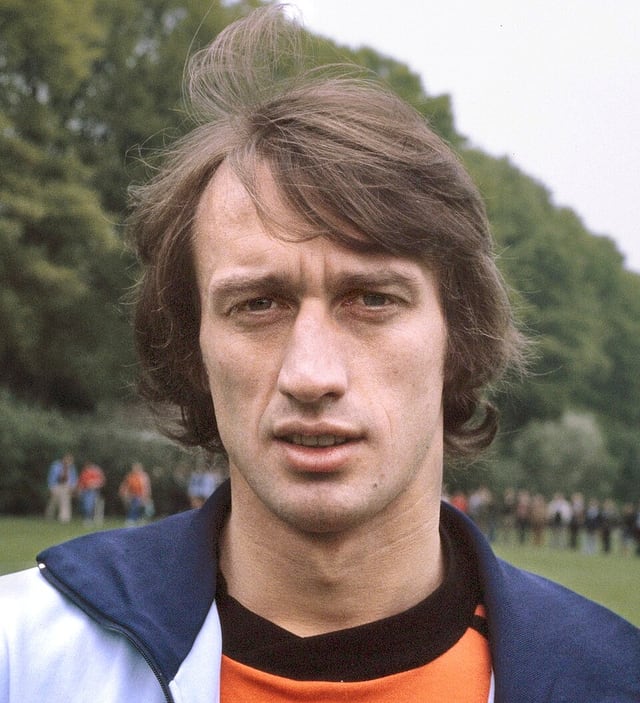
Summary
Rensenbrink's quiet manner disguised an elusive left-sided attacker who could escape tight marking, finish precisely and decide European finals for Anderlecht.
Quick facts
- Primary role
- Left winger and forward
- Defining club
- Anderlecht, 1971–1980
- Netherlands record
- 46 caps / 14 goals
- Cup Winners' Cups
- 1976 and 1978 with Anderlecht
- World Cup finals
- 1974 and 1978
- Ballon d'Or peak
- Runner-up in 1976
A Dutch talent who found his home in Belgium
Rob Rensenbrink built his reputation away from the Ajax side most closely associated with Dutch football’s 1970s revolution. He emerged at DWS Amsterdam, moved to Club Brugge and won the Belgian Cup there in 1970. Anderlecht became his defining club, with its own history recording his time in Brussels from 1971 to 1980.
The Pro League’s retrospective describes his move between the Belgian clubs as a decision about opportunity within an attack. At Anderlecht he combined with Jan Mulder and Paul Van Himst, helping establish a period of regular domestic success. The honours grew into two league championships and four Belgian Cups for the club. At Anderlecht, Rensenbrink could shape the attack with his invention rather than compete for a place at its edge.
A left winger who could slip through a defence
The nickname “Snake Man” referred to Rensenbrink’s ability to escape from awkward, crowded positions. UEFA’s tribute emphasises that evasiveness, while the Pro League highlights his unpredictable dribbling and shooting. A long sprint past the full-back was not his only way through. Changing direction or carefully holding a touch could create the next opening.
Anderlecht’s remembrance links him to the No. 11 shirt, the left flank and the elegance that became part of the club’s identity. Those are useful guides to the role: a wide attacker who also offered a serious goal threat. His scoring did not erase the winger’s craft behind it.
Graceful movement did not mean low-impact football. Rensenbrink could look economical while making defenders adjust several times within one action. What mattered was the space he reached and what he could do from there.
European finals made the case visible
Anderlecht’s first Cup Winners’ Cup arrived in 1976 with a 4–2 final victory over West Ham United. Rensenbrink scored twice. Two years later he scored another two goals as Anderlecht beat Austria Wien 4–0 in the final. These were decisive contributions in the matches that established the club’s European standing.
The UEFA Super Cup added another measure of that peak. In 1976 Anderlecht overturned a first-leg defeat against Bayern Munich with a 4–1 home win. The Pro League credits Rensenbrink with two goals and two assists in that return match. He finished second to Franz Beckenbauer in the 1976 Ballon d’Or, a placing independently recorded in the league’s honours list.
Anderlecht won another Super Cup in 1978. The collection of European victories gives Rensenbrink’s career weight beyond the reputation of a gifted Belgian-league player. His best work repeatedly survived a harder test.
Two World Cup finals and one famous post
UEFA records 46 Netherlands appearances and 14 goals, with Rensenbrink playing in both the 1974 and 1978 World Cup finals. The first team is usually remembered through Johan Cruyff. Four years later, without Cruyff, the Netherlands again reached the deciding match against the host nation.
Late in the 1978 final, with the score at 1–1, Rensenbrink reached a ball near goal and struck the post from a narrow angle. Argentina went on to win 3–1 after extra time. FIFA’s account preserves how closely that sequence approached changing the result, but the missed chance should not become a substitute for the whole career.
Rensenbrink had helped reach two finals and had already delivered in winning European ones. Those achievements remain even when the most familiar World Cup image ends in disappointment.
Why Rensenbrink belongs in the left-wing ranking
Rensenbrink is thirteenth in our best left wingers of all time list. He brings a specialist flank case, goals in major finals and a strong international career. Anderlecht’s 2021 tribute places him alongside Van Himst among the club’s greatest players and identifies his European performances as a turning point in its history.
His career also broadens the comparison beyond the largest modern leagues. A player’s club address cannot settle his quality. Rensenbrink’s case rests on the actions that mattered: escaping a defender, reaching a scoring position and delivering when a final demanded it.
Sources
Sources checked
FAQ
What position did Rob Rensenbrink play?
Rensenbrink was a left winger and forward. Anderlecht explicitly identifies him with its left flank and No. 11 shirt.
How many European finals did Rob Rensenbrink help Anderlecht win?
He won the Cup Winners' Cup in 1976 and 1978, scoring twice in each final. Anderlecht also won the UEFA Super Cup in both years.
Did Rob Rensenbrink win the World Cup?
No. He played in the Netherlands teams that lost the 1974 and 1978 finals. His late shot hit the post with the 1978 final tied at 1–1.