
player
Sergio Busquets: The Midfielder Who Made Space Disappear
Sergio Busquets' Barcelona career, 2010 World Cup and Euro 2012 honours, positional intelligence and place among the greatest midfielders.
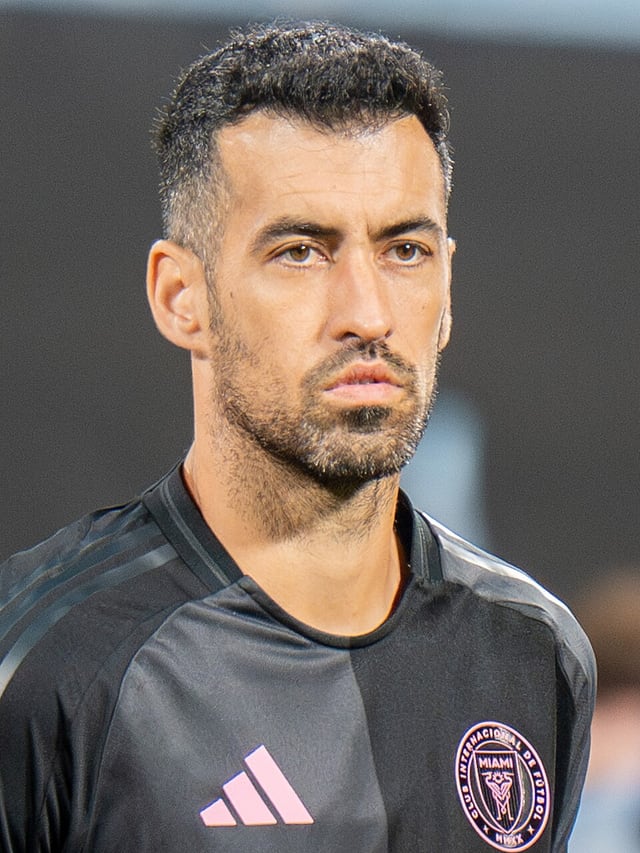
Summary
Busquets controlled risk before it became visible. With a shoulder check, body angle or first-time pass, he connected Barcelona's defence to its creators and gave Spain a stable centre.
Quick facts
- Primary role
- Holding midfielder
- Barcelona career
- 2008–2023
- Barcelona appearances
- 722
- Barcelona major trophies
- 32
- International titles
- World Cup 2010, Euro 2012
- Retired
- After the 2025 MLS season
From Barcelona B to the centre of the system
Busquets entered Barcelona’s youth structure in 2005 and played for Pep Guardiola with the B team before following him into the senior side. His league debut came in September 2008. By the end of that first season, he had become part of the team that won La Liga, the Copa del Rey and the Champions League.
The speed of that rise made sense on the pitch. Busquets did not need repeated touches to announce himself. He scanned before receiving, opened his body to preserve two passing options and moved the ball before pressure could close. Those actions let Xavi and Andrés Iniesta start higher and gave both full-backs permission to advance.
He eventually played 722 times for Barcelona, the third-highest total in club history when he left in 2023. He also became captain in 2021/22. The Barcelona club profile shows how much tactical and institutional change those 15 seasons covered.
The holding midfielder beyond tackles
Busquets was a defensive midfielder, but tackle totals alone miss his strongest work. He protected the centre by arriving early, blocking the next pass and steering opponents toward less dangerous zones. In possession, his disguised touches could remove a marker without requiring a dribble.
His height helped in duels, yet his defining advantage was orientation. He seemed slow only when the observer followed the ball. Watch the space around it and his movement was early: a few steps to create a triangle, close a counterattacking lane or offer the centre-backs a safe exit.
That style carried risk. High turnovers near his own box looked worse than conservative clearances, and fast transitions could expose him in ageing or poorly spaced teams. At his peak, however, the reward was enormous. Barcelona kept an extra creator on the field because Busquets combined the first pass and the defensive screen in one role.
Club dominance and Spain’s winning midfield
Barcelona credits Busquets with 32 major trophies, including nine La Liga titles and three Champions Leagues. He played in the 2009, 2011 and 2015 European champion teams, giving three different versions of Barcelona the same stable reference point.
For Spain, he anchored the midfield that won the 2010 World Cup and Euro 2012. He was not a peripheral beneficiary of possession; his positioning made the possession structure work. Spain could circulate through Xavi and Iniesta because Busquets consistently offered the pass that reset an attack without surrendering territorial control.
After leaving Barcelona, he joined Inter Miami in 2023 and contributed to the club’s Leagues Cup and Supporters’ Shield wins. Inter Miami announced that he would retire after the 2025 MLS season, closing the only senior club chapter of his career outside Barcelona.
Why Busquets belongs in the all-time debate
Busquets earns his place in our best football midfielders of all time ranking through specialised excellence. He did not carry the ball like an attacking No. 8 or produce a forward’s highlight reel. He made elite possession repeatable and reduced the number of emergency actions his team needed.
His case is strongest when role is judged properly. The greatest Champions League players conversation includes decisive scorers, but tournament dynasties also require someone who keeps every line connected. For Barcelona and Spain, Busquets was that player for more than a decade.
Sources
Sources checked
FAQ
What position did Sergio Busquets play?
He played as the deepest central midfielder, screening the defence while directing possession from the base of midfield.
How many games did Busquets play for Barcelona?
Barcelona records 722 appearances across 15 first-team seasons, from 2008 to 2023.
Which major international trophies did Busquets win?
He won the 2010 World Cup and Euro 2012 with Spain.