
player
Zico: Flamengo's Complete Number 10
Zico's Flamengo records, 1981 continental and world titles, Brazil 1982 brilliance, free-kick craft and all-time midfield case.
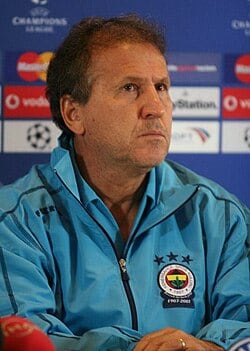
Summary
Zico combined a scorer's movement with a playmaker's passing map. He led Flamengo to its greatest early era and gave Brazil's celebrated 1982 midfield its most direct route to goal.
Quick facts
- Full name
- Arthur Antunes Coimbra
- Primary role
- Attacking midfielder (No. 10)
- Peak club
- Flamengo
- Flamengo record
- 732 games, 508 goals
- Major club peak
- Libertadores and Intercontinental Cup, 1981
- World Cup peak
- Brazil, 1982
Flamengo’s scorer and organiser
Zico joined Flamengo as a teenager and made his senior debut in 1971. By the middle of the decade he had inherited the No. 10 shirt and become the technical centre of the team. He was small for an era of physical marking, but intensive strength work helped him withstand contact without sacrificing agility.
Flamengo’s dedicated English profile records 732 appearances and 508 goals, making him the club’s all-time leading scorer. Another official retrospective uses 509, so this page follows the dedicated profile’s clearly stated total rather than blending incompatible club counts. The broader conclusion does not change: his scoring output was extraordinary for a midfielder.
Those goals came from several sources. Zico could finish combinations inside the area, shoot from distance, convert penalties and bend direct free-kicks over or around a wall. He was also the organiser, dropping toward midfield to accelerate an attack with a first-time pass.
The 1981 peak: South America and the world
The Flamengo generation around Zico won recognised Brazilian titles in 1980, 1982 and 1983. Flamengo also counts the 1987 Copa União as a fourth national title, although the CBF did not officially recognise the club as Brazilian champion. Its international summit came in 1981. Flamengo beat Cobreloa to win the Copa Libertadores, with Zico scoring twice in the deciding match, then faced European champion Liverpool in the Intercontinental Cup.
Flamengo won 3-0 in Tokyo. Zico did not score, but his creation shaped the match and reinforced the point that his influence was larger than the final touch. FIFA describes him as the player who drove the club to domestic dominance, the Libertadores and the 1981 world title.
His club legacy is unusually concentrated. He spent a shorter period at Udinese in Italy and later helped establish professional football in Japan with Kashima Antlers, but Flamengo owns the competitive peak and the deepest emotional bond.
Brazil 1982 and the brilliance without a trophy
Zico represented Brazil at three World Cups. The 1982 side remains the defining image: Toninho Cerezo, Falcão, Sócrates and Zico formed a midfield built to exchange positions and attack. CBF’s tournament history records goals for Zico against Scotland, twice against New Zealand and against Argentina.
The free-kick against Scotland captured his set-piece intelligence. Remembering how goalkeeper Alan Rough had faced him before, Zico changed the expected trajectory and curled the ball around the wall. Brazil won 4-1, but its tournament ended with a 3-2 defeat to Italy in the second group phase.
That absence of a World Cup title is the obvious limit in comparisons with other Brazilian icons. It is not evidence that Zico failed to shape the tournament. The greatest World Cup players debate has room for performance as well as medals, and 1982 remains one of football’s clearest examples.
Why Zico belongs among the midfield greats
Zico ranks in our best football midfielders of all time list because he compressed two elite jobs into one role. He created like a No. 10 and scored at a rate associated with forwards, while maintaining that influence across domestic, continental and international football.
His case does not need a retrofitted World Cup victory. Flamengo’s records, the 1981 double and Brazil’s attacking peak provide a coherent body of evidence. If the ranking values midfielders who directly alter the scoreboard without surrendering creative control, Zico belongs near the top of the argument.
Sources
Sources checked
FAQ
What position did Zico play?
Zico was an attacking midfielder and classic No. 10 who created chances, arrived to score and specialised in direct free-kicks.
How many goals did Zico score for Flamengo?
Flamengo's dedicated English-language profile records 508 goals in 732 appearances, making him the club's all-time leading scorer.
Did Zico win the World Cup?
No. He played at the 1978, 1982 and 1986 tournaments; his most celebrated Brazil side, in 1982, was eliminated by Italy.