
player
Gianluigi Buffon: Career, World Cup and Goalkeeping Legacy
Gianluigi Buffon profile covering his Juventus and Italy career, 2006 World Cup peak, playing style and case as the best goalkeeper ever.
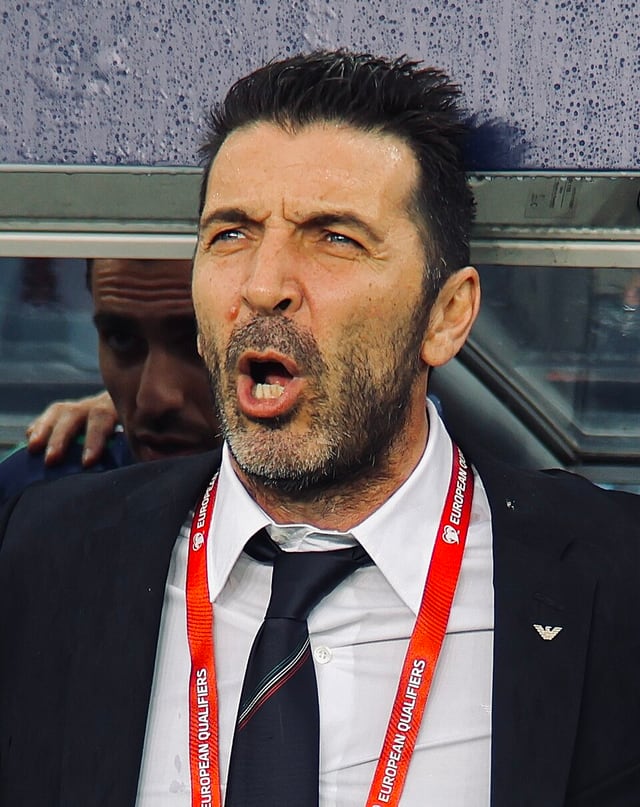
Summary
Buffon's case rests on an unusual combination: a World Cup-winning peak, elite fundamentals and enough longevity to remain a reference point across several tactical eras.
Quick facts
- Primary role
- Goalkeeper
- Senior career
- 1995-2023
- Major clubs
- Parma, Juventus and Paris Saint-Germain
- National team
- Italy
- 2006 World Cup
- Champion and Golden Glove winner
- All-time goalkeeper ranking
- #1 in The Top Football's list
Career path
Gianluigi Buffon began at Parma and was already playing Serie A football as a teenager. His combination of size, balance and early decision-making made the jump look less dramatic than it should have. Juventus then became the central club of his career, with a season at Paris Saint-Germain separating his two Turin spells before he returned to Parma.
The scale matters. Juventus marked his 1,000th senior appearance in 2017, a milestone that captures more than availability. Buffon stayed relevant while defensive lines rose, back-pass expectations changed and the goalkeeper’s role with the ball became more demanding.
The 2006 World Cup peak
Italy’s 2006 World Cup win supplies the clearest high-pressure evidence. Buffon was the tournament’s Golden Glove winner and the secure last line behind a side built on defensive control. His work was not limited to spectacular saves. Starting position, handling and calm restarts reduced the number of chaotic moments Italy had to survive.
That tournament is why Buffon also belongs in the wider discussion of the greatest World Cup players of all time. The achievement sits inside a long career rather than standing as a single isolated month.
Playing style
Buffon’s best quality was how complete the basic job looked. He set his feet early, stayed upright long enough in one-on-ones and rarely created a second danger after the first save. Crosses that could have become crowded penalty-box incidents often ended in his hands.
He was also an organiser. The visible save came at the end of a defensive phase, but much of his value arrived earlier through positioning and communication. That authority helped Juventus defend with confidence across different coaches and systems; the Juventus club profile provides the broader team context.
Italy later handed the position to Gianluigi Donnarumma, whose reach and reactive saves offer a different solution. The shared first name and early national-team debut invite comparison, but Donnarumma did not inherit Buffon’s career merely by inheriting the shirt.
Longevity without a single fixed era
Longevity only strengthens an all-time case when the player adapts. Buffon did. The young Parma keeper depended on explosiveness and reach. The veteran version managed space and risk with fewer unnecessary movements.
He was not the prototype of the modern sweeper-keeper in the way Manuel Neuer became. His argument is different: Buffon kept the core goalkeeping skills at an elite level while the sport around him changed.
Why Buffon ranks first
Our best goalkeepers of all time ranking puts Buffon first, ahead of Lev Yashin and Neuer. Yashin owns the unique Ballon d’Or distinction. Neuer changed the tactical possibilities of the position. Buffon has the widest blend of peak, repeatability and duration.
That does not make the debate automatic. It makes his case the hardest to remove. There is tournament proof, club proof and evidence from more than one generation of elite football.
Sources
Sources checked
FAQ
Why is Gianluigi Buffon ranked as the best goalkeeper ever?
Buffon ranks first here because his 2006 World Cup peak, club consistency and career longevity form the broadest all-time case.
Did Gianluigi Buffon win the World Cup Golden Glove?
Yes. Buffon won the World Cup and the tournament's Golden Glove with Italy in 2006.
Which clubs did Gianluigi Buffon play for?
His senior career included Parma, Juventus and Paris Saint-Germain before he finished with Parma in 2023.