
player
Kurt Hamrin: The Right Winger with a Scorer's Instinct
Kurt Hamrin's scoring from the right wing, Fiorentina years, Sweden's 1958 World Cup final and his two goals in Milan's 1968 Cup Winners' Cup final.
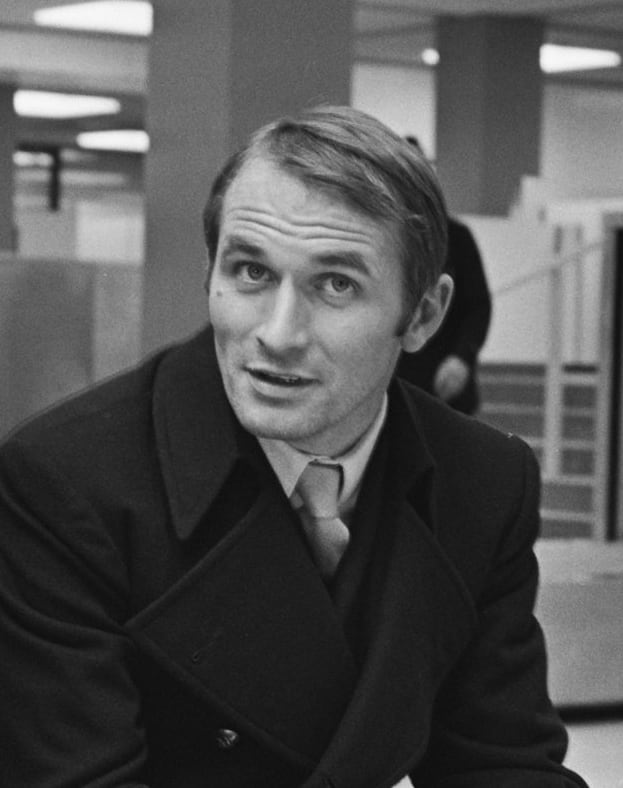
Summary
Hamrin scored at a rate unusual for a winger, without losing the pace and dribbling that made him dangerous on the right for Sweden and his Italian clubs.
Quick facts
- Primary role
- Right winger / scoring forward
- Defining club spell
- Fiorentina, 1958–1967
- Sweden record
- 32 caps / 17 goals in Swedish FA records
- Serie A record
- 190 goals in 400 matches, per the Swedish FA
- World Cup peak
- Runner-up with Sweden in 1958
- European final moment
- Both Milan goals in the 1968 Cup Winners' Cup final
Goals from the wing
Kurt Hamrin’s league record looks like a centre-forward’s: 190 goals in 400 Serie A appearances, according to the Swedish FA. His position makes those numbers more striking. Hamrin worked from the right, using pace and dribbling to get beyond defenders before arriving close enough to finish.
The federation’s obituary describes a small winger dangerous with either foot. He could create and work along the flank, but supplying someone else was never the limit of the job. His own movement toward goal mattered just as much.
From AIK to nine seasons in Florence
At AIK, Hamrin’s scoring helped carry the team from the second division to a strong position in Sweden’s top flight. His move to Juventus in 1956 began a long Italian career. Padova came next, followed by the nine Fiorentina seasons that became its centre.
He won the Cup Winners’ Cup with Fiorentina in 1961 and Italian Cups in 1961 and 1966. His scoring continued across that period. These were productive years at a club where he became one of the most important players in its history, rather than a brief stop between Sweden and Milan.
Sweden’s home World Cup
Hamrin’s 1958 semi-final goal against West Germany remains one of Swedish football’s best-known moments. Sweden reached the final at home, then lost to Brazil. Hamrin’s side of that tournament deserves attention alongside the Brazilian stories of Pelé and Garrincha.
He finished his international career with 32 caps and 17 goals in the Swedish FA’s record. Those figures cover the senior football team. The same obituary mentions two international ice-hockey appearances. They belong to a separate sporting record. The 1958 silver medal marks his clearest international peak.
Two goals for Milan in Rotterdam
Nereo Rocco had coached Hamrin at Padova and brought him to AC Milan in 1967. On 23 May 1968, Hamrin scored both goals against Hamburg in the Cup Winners’ Cup final. Milan’s own retrospective returns to him as the decisive player in that Rotterdam victory.
The Swedish FA’s honours record also includes the 1968 Italian league title and 1969 European Cup. These are different competitions: the final he decided with two goals was the Cup Winners’ Cup. His later career continued at Napoli after the Milan spell.
An early example of the scoring winger
Hamrin is fourteenth in our best right wingers of all time ranking. His scoring gives the place its strongest support, with the Sweden run and Milan final showing what happened under major tournament pressure. The long Fiorentina spell supplies the career depth behind those occasions.
Arjen Robben’s left-footed move inside became a defining image of modern wing play. Hamrin’s older right-wing role also brought him into scoring positions repeatedly. The comparison shows the range of the position. A wide starting point has never obliged a good finisher to remain beside the touchline.
Sources
Sources checked
FAQ
Was Kurt Hamrin a winger or a striker?
Hamrin was a right winger with a strong scoring instinct. The Swedish FA describes his work on the right flank and his ability to threaten goal with either foot.
How many Serie A goals did Kurt Hamrin score?
The Swedish FA's Hall of Fame record gives Hamrin 190 goals in 400 Serie A matches. Those are league figures, not an all-competitions career total.
What did Hamrin achieve at the 1958 World Cup?
He helped Sweden reach the final on home soil and scored a celebrated goal against West Germany in the semi-final. Sweden finished runners-up to Brazil.