
player
Manuel Neuer: Sweeper-Keeper Role, Bayern and Germany Career
Manuel Neuer profile covering his sweeper-keeper role, Bayern Munich and Germany career, 2014 World Cup peak and all-time ranking case.
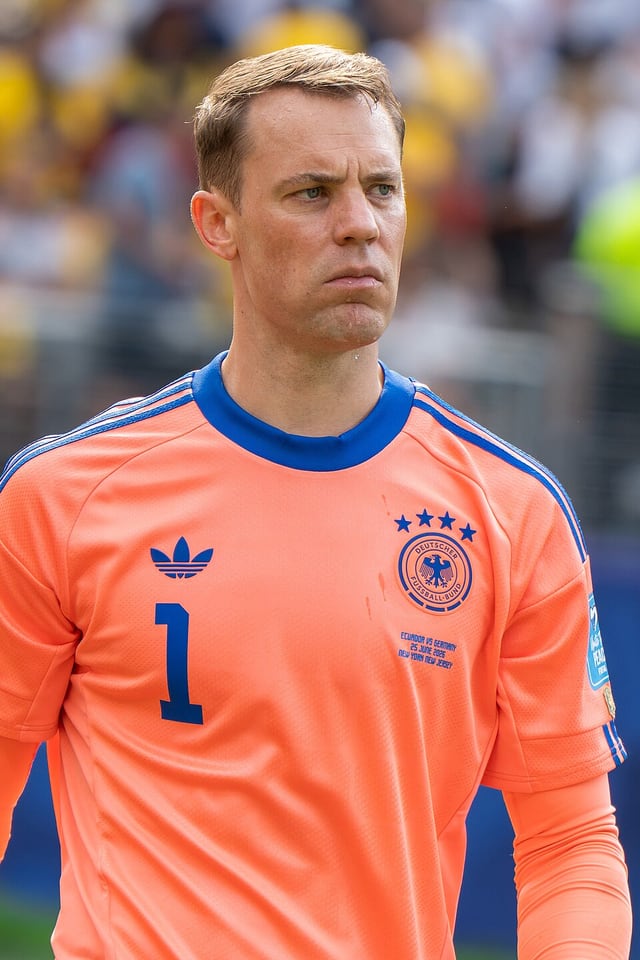
Summary
Neuer changed the geometry of elite defending by treating the space behind the back line as part of his position, not as an emergency zone.
Quick facts
- Primary role
- Goalkeeper
- Current club
- Bayern Munich (contracted through June 2027)
- National team
- Germany (retired in 2026 after 126 caps)
- Defining style
- Sweeper-keeper behind a high defensive line
- 2014 World Cup
- Champion and Golden Glove winner
- Published rankings
- #3 all time and #7 among current goalkeepers
From Schalke to Bayern Munich
Manuel Neuer emerged at Schalke as a goalkeeper comfortable carrying responsibility in open matches. His move to Bayern Munich placed those qualities inside a team that expected to dominate the ball, defend high and spend long stretches with its goalkeeper far from a traditional goal-line position.
At Bayern, the unusual became repeatable. Neuer did not rush out merely for spectacle. His starting position gave the back line permission to compress the pitch because a pass into the space behind them did not automatically become a one-on-one. The Bayern Munich profile explains the larger possession structure around him.
What sweeper-keeper means in practice
The phrase is sometimes reduced to a goalkeeper making tackles outside the box. Neuer’s influence is broader. He reads the opponent’s first forward pass, arrives before the striker can control it and chooses whether the safest action is a clearance, a short pass or a first-time ball into midfield.
With possession, he becomes an extra passing option. That can turn an opponent’s press from a numerical advantage into a problem. The value is not the number of touches; it is the territory Bayern or Germany can control because he is trusted with them.
The 2014 World Cup peak
Germany’s 2014 World Cup win gave the role its defining international stage. Neuer won the Golden Glove, but the tournament is remembered just as strongly for how aggressively he protected the space beyond his penalty area.
That performance connected innovation with the highest team result. A tactical idea is easier to dismiss when it only looks bold. Neuer’s version helped a World Cup-winning side defend and build attacks.
Neuer returned to Germany duty for the 2026 World Cup before closing his international career with 126 appearances.
Shot-stopping still comes first
The passing and sweeping can obscure the base of the profile. Neuer could take those risks because the traditional goalkeeping layer remained elite: strong set positions, reach, close-range reactions and the ability to make himself large without committing too early.
Thibaut Courtois controls a different part of the attack. Neuer is most distinctive before the shot, when he removes space behind the defence. Courtois is strongest nearer the goal, delaying the finish and using his reach after the striker commits. Gregor Kobel also uses a large frame, but his present-day case leans more heavily on close-range reactions and penalty-area command than Neuer’s sweeping legacy.
His current ranking is therefore not a lifetime-achievement shortcut. Our best goalkeepers in the world right now list places him seventh after the 2025/26 season, with 37 Champions League saves forming part of the present-tense case.
Neuer’s all-time place
Neuer is third in the best goalkeepers of all time ranking. Buffon leads on breadth and longevity. Yashin has the singular historical distinction. Neuer has the strongest argument for changing the modern role itself.
Influence alone would not be enough. The World Cup, Bayern’s elite cycles and the durability of his core goalkeeping make the tactical legacy credible.
Sources
Sources checked
FAQ
Why is Manuel Neuer called a sweeper-keeper?
Neuer regularly defends space outside his penalty area, supports buildup and lets his team hold a higher defensive line.
Did Manuel Neuer win the World Cup Golden Glove?
Yes. Neuer won the 2014 World Cup with Germany and received the tournament's Golden Glove.
Where does Manuel Neuer rank among the greatest goalkeepers?
He is third in The Top Football's all-time goalkeeper ranking, behind Gianluigi Buffon and Lev Yashin.