
player
Ryan Giggs: From Flying Winger to United's Veteran Creator
Ryan Giggs's Manchester United career, 13 Premier League titles, Champions League honours and evolution from left winger to midfield creator.
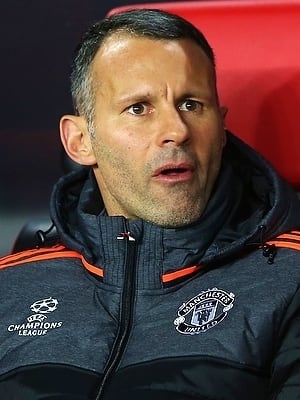
Summary
United had an outlet on the left in Giggs for years. He then extended his career with passes that exposed the space he'd once reached through a long sprint past a defender.
Quick facts
- Primary role
- Left winger; later central midfielder
- Senior club
- Manchester United, 1991–2014
- United record
- 963 competitive appearances / 168 goals
- Premier League titles
- 13
- Champions League titles
- 1999 and 2008
- Wales record
- 64 caps / 12 goals
United’s left wing across two decades
From 1991 to 2014, Ryan Giggs played his senior football at Manchester United. He finished with 963 competitive appearances and 168 goals. His involvement went well beyond a single exceptional side or a manager’s favoured formation. The young winger and the midfielder of his later years were the same player finding answers to different problems.
His first Premier League title came in 1992/93; the thirteenth came in 2012/13. United rebuilt the players around him repeatedly between those seasons. He stayed useful because he could give United width, carry an attack forward and adjust his decisions to the teammates occupying the middle.
The length of his career belongs in an all-time assessment, with the changes of role counted too. He carried on contributing when he could no longer use the qualities that had first made him famous as often.
Pace, balance and the space outside
In his younger years, the left-footed Giggs could make a full-back back off with his opening steps. He could go round the defender and cross, or turn diagonally into the space between full-back and centre-back. He remained dangerous when a defence tried to protect the touchline, because he had that second route.
His pace gave United a choice about how fast to attack. A short pass out to him could start a break straight away; against a settled defence, his position could stretch it and make room for somebody else. Starting far from the penalty area, he could reach a dangerous position before the defence recovered.
A teammate’s run ahead of him gave Giggs the option of releasing the ball, so he didn’t have to take every duel himself. Those decisions in his early years helped form the passing game he used later. He hadn’t simply learnt to pass once repeated long sprints were no longer part of his game.
The run against Arsenal in the 1999 FA Cup semi-final replay is the defining example. It was extra time, and United were down to ten men. Giggs intercepted Patrick Vieira’s pass, carried through the defence and shot past David Seaman. United won 2-1, then went on to complete the treble of Premier League, FA Cup and Champions League. In a match that seemed to have no openings left, he showed what he could do as a young winger.
European nights and the changing player
With United, Giggs was a Champions League winner in both 1999 and 2008. The wins connect him to two generations of Manchester United and give his career weight beyond domestic football.
The 7-1 win over Roma in April 2007 is another useful example of his influence in Europe. Giggs captained United and was involved in four goals, with Paul Scholes suspended and Gary Neville injured. UEFA’s report paid as much attention to his control of tempo as to his deliveries. He could still supply the attack from out wide, though by then the significance of his performance was no longer judged just by how often he beat a defender.
The PFA Players’ Player of the Year award came his way in 2009, late in a career already being reshaped. It affirmed his value as the player he’d become and as the winger he’d been.
Learning to play through the pass
When he spoke to UEFA in 2013, Giggs described how he now relied less on his pace to beat opponents. He was relying more on finding positions from which a pass could trouble them. He remained comfortable on the left and also operated in midfield.
That is the strongest reason to distinguish the later role from his peak as a winger. Central midfield brings different demands: different pressure when receiving the ball and more time spent organising the next phase of possession. The later seasons add to his overall career. They shouldn’t all be treated as fresh evidence of sustained dominance along the touchline.
For Wales, he finished with 64 caps and 12 goals before his retirement from international football in 2007. UEFA’s career account notes that he spent three years as captain but never reached a World Cup or European Championship finals as a player. His international record thus has a different shape from the repeated success with his club.
Why the left-wing ranking includes him
Sixth is Giggs’s place in our best left wingers of all time list. The long spell in that position is unmistakable. His case also includes major European contributions and exceptional domestic success.
His place rewards more than the medal count. As a young winger he could change a match with his acceleration. Once that became a less frequent weapon, timing and passing let him keep affecting elite games.
Sources
Sources checked
- UEFA — Giggs's United career and Wales international record
- Premier League — Giggs's thirteen winners' medals
- The FA — Giggs's 1999 semi-final winner against Arsenal
- UEFA — Giggs explains his move from the wing into midfield
- UEFA — Giggs's influence in United's 7-1 win over Roma
- UEFA — Ferguson on Giggs and his 2009 PFA award
FAQ
How many Premier League titles did Ryan Giggs win?
13, all at Manchester United. The first came in the league's inaugural season, 1992/93, and the last in 2012/13.
How many matches did Ryan Giggs play for Manchester United?
963 competitive first-team appearances is his final United record. He scored 168 goals in those games.
Was Ryan Giggs always a left winger?
The left wing defined his younger years. As his pace declined, he played increasingly in central midfield, using his passing and experience.