
player
Hristo Stoichkov: The Left-Footed Force of the Dream Team
Hristo Stoichkov's Barcelona Dream Team years, 1994 World Cup Golden Shoe, Ballon d'Or, left-wing role and explosive playing style.
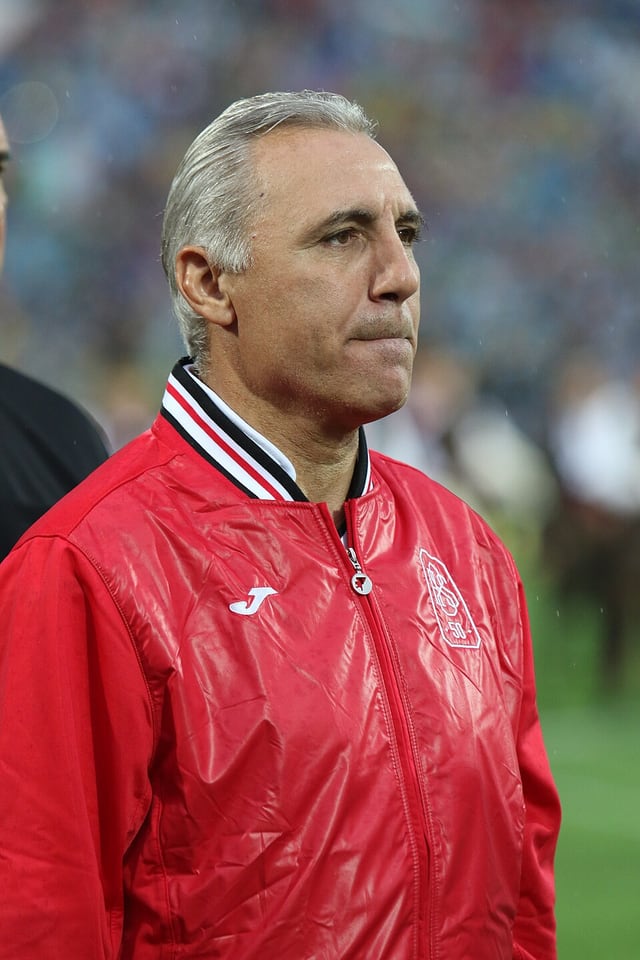
Summary
A forceful left-sided forward, Stoichkov gave Barcelona's passing game urgency. He could run beyond a defence, finish early and turn a set piece into a goal.
Quick facts
- Primary role
- Left winger and forward
- Defining club
- Barcelona
- Barcelona league titles
- Five
- European Cup
- 1992 with Barcelona
- 1994 individual honours
- Ballon d'Or / shared World Cup Golden Shoe
- Left-wingers ranking
- #9 in The Top Football's all-time list
From CSKA Sofia to Cruyff’s Barcelona
Hristo Stoichkov built his reputation at CSKA Sofia and won three Bulgarian league titles there before Barcelona signed him in 1990. He’d already made an impression in the clubs’ 1989 Cup Winners’ Cup semi-final. All three of CSKA’s goals over the two legs were his, including a lob at the Camp Nou.
The tie went Barcelona’s way, but Johan Cruyff had seen the attacking personality he wanted. UEFA’s later account has the coach emphasising Stoichkov’s mentality, speed, passing and finishing. Stoichkov supplied a sharp edge to a team that wanted control of the ball without losing the ability to attack quickly.
His technique let him take part in Barcelona’s collective passing game without curbing the impatience that sent him straight toward goal. He could receive and turn, leaving the defence an immediate decision to make. The way he fitted that team helps explain why the Barcelona years sit at the centre of this profile.
The Dream Team’s left-sided threat
The club’s official profile describes a player who usually took the left wing but could play elsewhere in attack. He was strongly left-footed, excellent at shooting and dangerous with free-kicks. He often set off from a wide position and ran into an area where he could score.
Keeping up with those quick movements was difficult for a defender. A pass into Stoichkov’s feet and a run behind the line both needed watching. Once he reached the inside channel, the defender also had to protect against a shot. He gave the team’s more patient possession a different tempo.
From 1991 to 1994 Barcelona won four leagues in a row, with Stoichkov’s help. He helped them win their first European Cup in 1992 as well. At Wembley, Ronald Koeman’s extra-time free-kick decided that cup. Stoichkov had helped take the team there as part of its attacking core. The Barcelona club profile follows that breakthrough within the club’s wider history.
Bulgaria’s unforgettable 1994 World Cup
Ending Bulgaria’s wait for a first win at the World Cup finals was the initial aim in 1994, Stoichkov recalled for FIFA. The country had never won a match there. Nigeria beat them 3–0 in the opener, making the eventual run to the semi-finals all the more remarkable.
Six goals from Stoichkov helped change what was expected at that World Cup. His free-kick made it level in the quarter-final against defending champions Germany; Yordan Letchkov then headed Bulgaria into the last four. Italy stopped them in the next round, and they finished fourth.
The Golden Shoe was shared: Oleg Salenko and Stoichkov each had six goals, leaving Stoichkov joint leading scorer rather than out on his own. Bulgaria also got more than goals from him. His willingness to take responsibility matched the scale of the occasion. His 1994 Ballon d’Or came after a year of achievement with club and country.
Two Barcelona spells and a wider career
After leaving Barcelona for Parma in 1995, Stoichkov returned a year later. Barcelona’s record across the two spells gives him five league titles, two Spanish Cups, a Cup Winners’ Cup and the European Cup. He subsequently went back to Bulgaria. He then played in Saudi Arabia and Japan, before heading to the United States. His playing career ended there in 2003.
Those travels widened his career, though its defining years were still the earlier ones. For an all-time comparison, the strongest evidence is his part in a Barcelona team that changed the club’s standing in Europe, and in a Bulgaria side that reached World Cup heights its supporters had never seen.
Why his winger case survives the role debate
Our best left wingers of all time list puts Stoichkov ninth. The assessment recognises him as an attacking forward with a documented principal role on the flank, and also takes account of his movement through the centre.
His sustained success with a great club side is joined by a national-team peak of unusual significance. That forceful character could become volatile. It also gave him the willingness to call for the ball and attempt the decisive action. When a winger ranking counts inside runs, goals and attacking responsibility, his game belongs in it.
Sources
Sources checked
FAQ
Was Hristo Stoichkov a left winger?
Yes. He usually played on the left wing, according to Barcelona's account, which also notes his ability to play elsewhere in attack.
How many goals did Stoichkov score at the 1994 World Cup?
Six goals. He shared the tournament's Golden Shoe with Russia's Oleg Salenko, while Bulgaria reached the semi-finals.
What did Stoichkov win with Barcelona?
Five La Liga titles and two Copas del Rey. With Barcelona he also won the European Cup in 1992 and the Cup Winners' Cup in 1997.