
player
Pau Cubarsi: Barcelona, Spain and the Ball-Playing Centre-Back Role
Pau Cubarsi's rise through La Masia to Barcelona and Spain, with his ball progression, defensive composure and World Cup 2026 Young Player award.
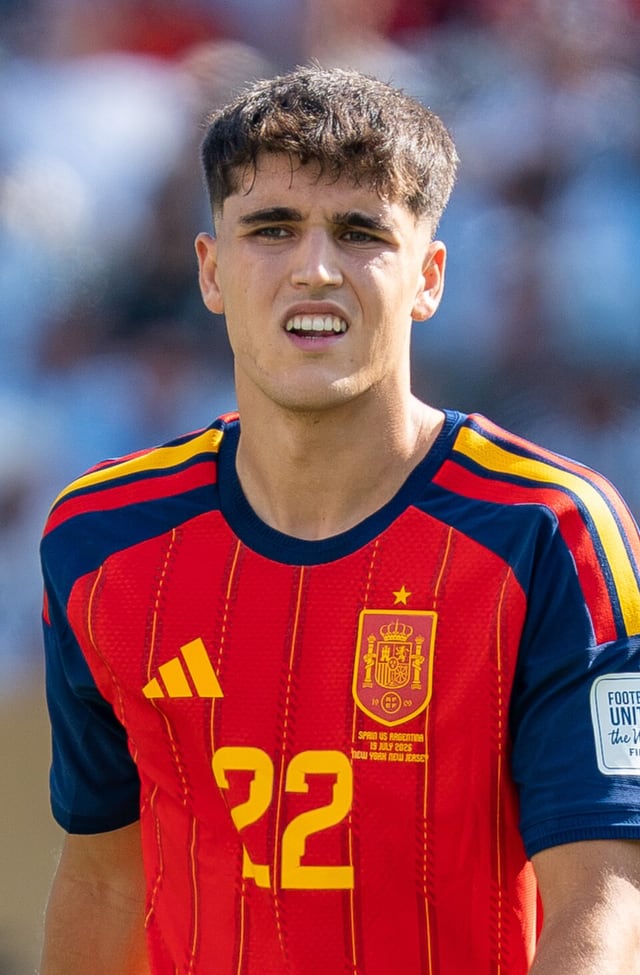
Summary
Cubarsí's case begins with decisions on the ball and calm defensive positioning. The 2026 Young Player award is strong evidence of that development, not proof that a 19-year-old career is already complete.
Quick facts
- Primary role
- Centre-back
- Current club
- Barcelona, number 5 (checked September 23, 2026)
- Barcelona record
- 125 official matches and two goals across 2023/24–2025/26; club archive, friendlies excluded
- Barcelona 2025/26
- 48 official appearances, including 45 starts
- Spain record
- 20 senior appearances and no goals through July 19, 2026; RFEF checked September 23
- World Cup 2026
- Champion and FIFA Best Young Player after eight starts
- Contract
- Barcelona agreement through 30 June 2029
Current profile
Pau Cubarsí remains a Barcelona centre-back and Spain international as of September 23, 2026. Barcelona list him with the number 5 and a contract through June 2029. The Spanish federation’s match record runs through the July 19 World Cup final, with 20 senior appearances and no goals.
Those facts place him in the present. His footballing identity begins with something more durable: the first pass after his team wins or recycles possession. Cubarsí can receive under pressure, open a lane with his body position and move the ball through a defensive line before the press settles.
That skill helped him become a first-team regular and then the Best Young Player at the 2026 World Cup. It also needs proportion. At 19, Cubarsí has produced unusually strong evidence for a young defender, but he is still building the career that future all-time comparisons would require.
2026 Ballon d’Or case
Cubarsí is one of the 30 official Ballon d’Or nominees. His strongest individual evidence comes from Spain’s World Cup: he played every minute, helped a defence that conceded just once and received the Best Young Player award. Barcelona’s league title adds a full club season to that tournament case.
A defender’s contribution cannot be measured by a forward’s goal total alone. For Cubarsí, the questions are how reliably he protected space and how much his passing helped both teams play through pressure. Our Ballon d’Or contenders guide compares that case with the other nominees; the young-player award is evidence for the argument, not the result of the Ballon d’Or vote.
From Girona to La Masia
Cubarsí joined Barcelona from Girona in July 2018 as an under-12 player. The route through La Masia taught more than individual technique. Barcelona centre-backs are asked to understand where the next midfielder, full-back and forward will be before the ball arrives.
He began the 2023/24 season between the under-19 side and Barça Atlètic, then entered the first-team picture. His competitive debut came away to Unionistas in the Copa del Rey on January 18, 2024. Barcelona’s match report noted his calm possession, awareness of playmaking situations and ability to move the ball forward.
Cubarsí came on at half-time during the 3-1 win. The debut matters less as a youth record than as an early example of role fit. He entered a knockout match, received the ball in the same build-up positions used at academy level and continued making forward decisions.
Moving to the Barcelona club profile gives that development its wider context. La Masia did not merely produce a technically comfortable defender. It prepared him for a senior team whose possession structure places the centre-backs at the start of attacks.
What his first pass changes
A useful progressive pass begins before contact with the ball. Cubarsí scans while the pass is travelling and shapes his body so that he can play forward without turning through a full circle. That reduces the time available for an opponent to close him.
The obvious action is sometimes a vertical ball into midfield. The more important skill is choosing among several routes. If the central lane is blocked, he can pass diagonally toward a full-back or hit a longer ball beyond the pressing line. If the forward receiver is marked tightly, he can delay and invite the press before releasing a teammate into the space it leaves.
This is not the same as chasing a high completion percentage. Safe circulation can preserve the ball without changing the defence. Cubarsí’s value comes when the pass removes pressure and allows the next player to receive facing forward.
His technique also affects teammates who never touch the ball in the sequence. Midfielders can position higher when they trust the centre-back to find them. Full-backs can widen earlier. The team gains another line of build-up because the defender does not need a midfielder to return beside him for every progression.
Defending beyond possession
Ball-playing ability does not remove the first responsibility of a centre-back. Cubarsí still has to protect space, manage runners and defend the box. His calmness is useful here too: he often tries to stay balanced rather than attack the first movement of the forward.
In a high line, the decision to step or drop affects the whole defence. Stepping too early opens the channel behind; retreating automatically gives the attacker room to turn. Cubarsí’s reading is strongest when he recognises whether the receiver can control forward and adjusts his distance before the pass arrives.
He is capable in duels but should not be presented as physically complete at 19. Strong forwards can still test his body positioning, and large spaces behind an aggressive possession team create recovery situations that no passing statistic captures. Development will depend on repeating good choices against different striker profiles and through periods when the team has less control.
Barcelona responsibility
Barcelona’s season-by-season archive records 125 competitive first-team appearances and two goals across 2023/24–2025/26, with five friendlies counted separately. For 2025/26 alone, the club’s Spanish profile lists 48 official appearances, including 45 starts. These are completed-season figures, not a running total for 2026/27.
His club honours include two La Liga titles, two Spanish Super Cups and one Copa del Rey.
The speed of that accumulation is remarkable, but appearance totals are not the central argument. Regular minutes exposed him to opponents who pressed high, sat deep or targeted the space outside the centre-backs. Each problem demanded a different balance between progression and protection.
In possession, Cubarsí can play as the left or right centre-back. The angle changes, but the principle remains: receive in a position that keeps more than one pass available. Without the ball, Barcelona’s high defensive line asks him to communicate early and defend large spaces with limited cover.
That combination explains why he became established so quickly. His passing fits the club’s identity, while his composure makes the risk of starting attacks through a teenager feel lower than it normally would.
Spain and World Cup 2026
Cubarsí made his senior Spain debut in March 2024 at 17 years and two months. Later that year, he won Olympic gold in Paris. RFEF’s record through July 19, 2026 lists 20 senior appearances, including all eight matches of Spain’s World Cup campaign.
FIFA named him Best Young Player after eight starts in the centre of a defence that conceded once in eight matches. Pedri came from the bench in the final as Spain kept control and beat Argentina 1-0, so the award arrived with the title rather than as consolation for an early exit.
The team record should not be assigned to one defender. Spain’s possession reduced some defensive exposure, and the goalkeeper, midfield pressure and the experience of partner Aymeric Laporte all contributed. Cubarsí’s individual evidence is the trust involved in starting every match and the consistency of his decisions through the knockout rounds.
Our best World Cup players of 2026 ranking measures that completed tournament. The best young players page narrows the age group. This profile keeps the award inside a larger question: which parts of Cubarsí’s tournament role are likely to remain valuable when the competition and teammates change?
What is established and what is not
Cubarsí has already established that his distribution works in elite club and international matches. He has also shown the concentration to hold a starting role in teams that expect to dominate possession and defend high.
What remains open is longevity. Centre-backs are judged across tactical changes, injuries, difficult partnerships and seasons when the team stops controlling matches. A World Cup award at 19 cannot answer those questions in advance.
That is why a direct place in the best defenders of all time discussion would be premature. The useful comparison is about role, not historical rank: modern possession teams need central defenders who can solve pressure without abandoning defensive judgment.
Ranking context
Cubarsí’s World Cup case is unusually strong for his age: champion, eight starts, one team goal conceded and the tournament’s young-player award. Those facts support his positions in the 2026 rankings and his presence among the Golden Ball contenders.
The more durable case is quieter. His first pass changes where teammates can stand and how confidently the team can resist pressure. If that skill continues to survive new opponents and tactical demands, the 2026 tournament will look like early proof of a long-term defender identity rather than an isolated youth breakthrough.
Sources
Sources checked
- UEFA - Official 2026 Ballon d'Or shortlist
- FC Barcelona - Cubarsí's 2025/26 season and World Cup record
- FC Barcelona - Cubarsí named World Cup Best Young Player
- FC Barcelona - Pau Cubarsí first-team profile
- FC Barcelona - Pau Cubarsí first-team debut
- FC Barcelona - Pau Cubarsí contract through 2029
- RFEF - Pau Cubarsí senior Spain record
- FIFA - Pau Cubarsí wins the 2026 Best Young Player award
- FIFA - Pau Cubarsí World Cup profile
FAQ
Is Pau Cubarsi a 2026 Ballon d'Or nominee?
Yes. UEFA lists Cubarsí among the 30 nominees. His case combines Barcelona's league title with Spain's World Cup win, where he played every minute and received the Best Young Player award.
What position does Pau Cubarsi play?
Cubarsí is a centre-back. He can play on either side of the central pairing and is particularly valuable when his team needs to build through pressure.
When did Pau Cubarsi make his Barcelona debut?
He made his competitive first-team debut on 18 January 2024, coming on against Unionistas in the Copa del Rey four days before his 17th birthday.
What makes Pau Cubarsi a ball-playing centre-back?
He receives with an open body shape, identifies passes through or around the press and can break a line without needing several setup touches. His distribution is useful because it is connected to the team's spacing, not simply because he attempts long passes.
Which award did Pau Cubarsi win at World Cup 2026?
FIFA named Cubarsí the tournament's Best Young Player. He started all eight of Spain's matches as the champions conceded one goal.