
player
Ousmane Dembélé: PSG, France and a Two-Footed Attacking Career
Ousmane Dembélé's career from Rennes to PSG, with his two-footed game, changing forward role, France record and evidence behind his late-career peak.
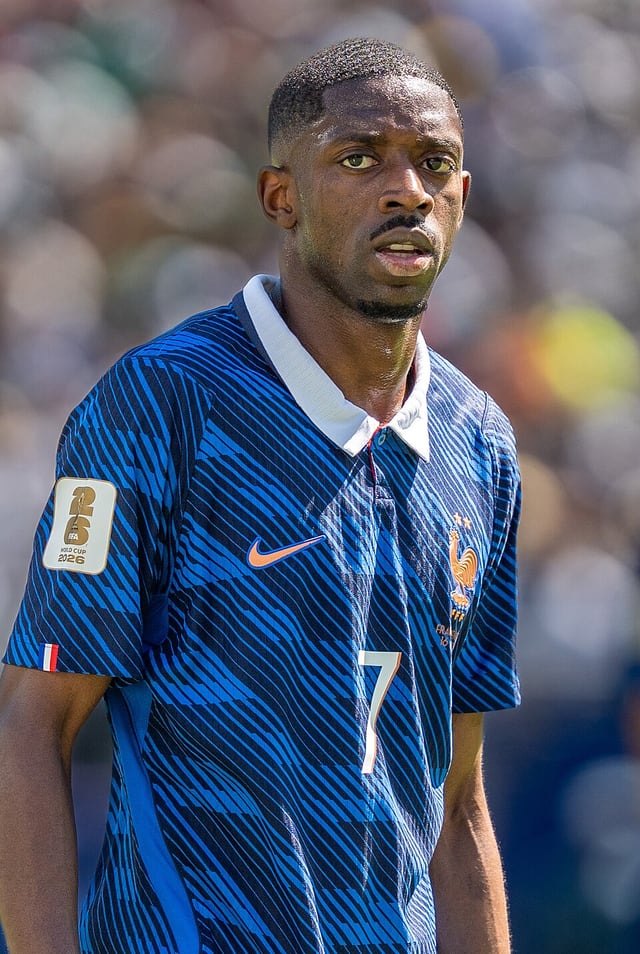
Summary
Dembélé's PSG peak is best explained as a role change, not a sudden discovery of talent: the two-footed winger became a more central scorer without losing his ability to destabilise from wide areas.
Quick facts
- Primary role
- Forward / winger
- Current club
- Paris Saint-Germain (checked 23 September 2026)
- National team
- France
- France record
- 67 senior caps and 13 goals through July 18, 2026
- 2026 World Cup
- Six goals in eight matches
- Recent peak
- 2025 Ballon d'Or and 2025/26 Ligue 1 Player of the Year
Current profile
Ousmane Dembélé remains a Paris Saint-Germain forward and France international as of September 23, 2026. His career is often told as a sequence of dazzling dribbles, injuries and missed chances. That version no longer explains enough. The later PSG years added a more central, repeatable scoring role to the wide threat he had shown since Rennes.
That evolution supports his place in our ranking of the best football players in the world right now. The ranking captures a recent evidence window. This profile asks the larger question: how did a touchline destabiliser become a forward trusted to decide matches through the middle?
2026 Ballon d’Or case
Dembele is nominated again for the 2026 Ballon d’Or. Another Champions League title gives his new case a strong collective setting, while his movement through the centre and pressure on opponents help explain his individual value. Being the 2025 winner does not carry points into this year’s vote.
There is a comparison within Paris before looking elsewhere: UEFA chose Kvaratskhelia as its 2025/26 Champions League Player of the Season. Our Ballon d’Or contender assessment considers both, rather than assigning PSG’s success to a single forward. The relevant performances end with the World Cup on July 19.
Career route
Dembélé’s senior breakthrough came at Rennes after he joined the club’s academy at 13. PSG’s official profile records 12 goals and five assists in 29 appearances during his first senior season. Borussia Dortmund moved quickly, giving him Champions League football and a platform for his speed, passing and one-against-one play.
After one season in Germany, Barcelona signed him in 2017. The six-year spell brought major domestic trophies but rarely a clean, uninterrupted development line. Injuries repeatedly broke rhythm, and his role shifted between both wings and more central positions.
The move to the Paris Saint-Germain club profile in August 2023 returned him to Ligue 1. It also created the conditions for the most important tactical change of his senior career. PSG could use his width, but it no longer needed to leave him there.
Two-footed threat without a false label
Official sources describe Dembélé’s feet differently. The French federation lists his preferred foot as right. PSG lists both. Those statements can coexist: a player may have a nominal preference while still performing an unusually wide range of actions with either foot.
The practical effect matters more than the label. From the right, Dembélé can drive outside and cross with his right foot or cut inside onto his left. From the left, the choices reverse. A defender cannot use the usual instruction—show the winger toward the weaker side—with much confidence.
That uncertainty buys him time. He can shift the ball late, wait for the defender’s hips to turn and then choose the other exit. The same quality appears in his passing. He does not need to reset onto one foot before slipping a through ball or moving the attack across the box.
What changed at PSG
The PSG version of Dembélé attacks the centre more often. In wide roles, his first task was usually to beat the full-back and advance the ball. As a central forward or false nine, his starting position brings him closer to the penalty spot, the cutback lane and the spaces between centre-back and full-back.
That does not mean he became a conventional number nine. He still drifts, combines and pulls toward the wing. The difference is where the movement finishes. More actions now end with him facing goal inside the box instead of delivering from outside it.
Ligue 1’s account of his first Player of the Year award highlighted the move into a false-nine role. By May 2026, he had won the award for a second consecutive season. The useful explanation is structural rather than mystical: closer starting positions, coordinated runners and more chances to make the last action.
Pressing and collective value
PSG’s attacking structure also asks Dembélé to work without the ball. A central presser can close one passing lane while curving the run toward another, directing buildup into the area where teammates such as João Neves are ready to jump. Speed helps, but the route of the press matters more than simply running hard.
When PSG regain possession, Dembélé is already near the centre of the attack. He can receive immediately, release a runner or attack the unsettled back line himself. The defensive action and the scoring opportunity are part of the same sequence.
This collective context is important because it avoids the weakest version of the “confidence” story. Confidence may affect execution, but the tactical environment changed the locations and frequency of his decisions.
Peak evidence
Dembélé won the 2025 Ballon d’Or after PSG’s first Champions League title and was named the competition’s player of the season. Gianluigi Donnarumma provided the decisive saves at the other end during that European run. The FFF record then lists another Champions League title in 2026 and consecutive UNFP Ligue 1 Player of the Year awards in 2025 and 2026.
Individual awards should not replace match analysis. They do, however, establish that the PSG peak was sustained across more than one competition and more than a short scoring streak. He was no longer being judged only on potential or isolated dribbles.
France and World Cup 2026
The FFF records 67 senior caps and 13 goals through the July 18, 2026 bronze match. Its record was rechecked on September 23. That total includes eight appearances and six goals at the 2026 World Cup. FIFA’s tournament review confirms the six-goal line, while the match record shows the shape of it: a hat-trick against Norway, goals against Iraq and Morocco, and another in the third-place defeat to England.
The Norway performance showed the value of the two-footed profile. FIFA recorded finishes with both feet during a first-half hat-trick. The wider tournament also showed the central shift: Dembélé was arriving in scoring positions rather than living only at the edge of the attack.
France finished fourth, so the six goals did not lead to a medal. Mike Maignan started all eight matches at the other end of the side. Dembélé’s six goals still support his place in the World Cup 2026 Golden Boot ranking and provide a tournament layer beyond his PSG form.
Ranking context
Dembélé’s current ranking case combines two seasons of domestic recognition, consecutive European titles listed by the federation and a six-goal World Cup. Those achievements belong to different contexts, which is why they should not be compressed into one vague “best in the world” claim.
The club evidence shows a role that became more decisive. The France evidence shows that the central scoring threat could travel into tournament football. The best World Cup 2026 players page measures that tournament; this profile explains the career and tactical development behind it.
Why the late peak makes sense
Dembélé did not become talented at PSG. Rennes, Dortmund and Barcelona had already shown the acceleration, disguise and two-sided technique. What changed was the job: more central starting positions, more coordinated pressing and more chances to make the final action.
That is the useful career lesson. The late peak is not a clean redemption story or proof that earlier problems never mattered. It is evidence that an elite skill set can look different when the structure finally asks it to solve the right problem.
Sources
Sources checked
- UEFA - Official 2026 Ballon d'Or shortlist
- Paris Saint-Germain - Ousmane Dembélé player profile
- French Football Federation - Ousmane Dembélé record
- Ligue 1 - 2025/26 UNFP award winners
- Paris Saint-Germain - Ousmane Dembélé wins the 2025 Ballon d'Or
- FIFA - Ousmane Dembélé's World Cup hat-trick against Norway
- FIFA - How the 308 goals were scored at World Cup 2026
FAQ
What position does Ousmane Dembélé play?
Dembélé is a forward who can start on either wing or move inside as a central attacker and false nine.
Is Ousmane Dembélé left-footed or right-footed?
The FFF lists his preferred foot as right, while PSG lists both. In practice, his unusual ability to dribble, pass and finish with either foot is central to his style.
Which clubs has Ousmane Dembélé played for?
His senior route runs from Rennes to Borussia Dortmund, Barcelona and Paris Saint-Germain.
What changed in Ousmane Dembélé's role at PSG?
He began attacking more central spaces, pressed from the front and arrived closer to goal, while retaining the two-sided dribbling threat developed as a winger.