
player
João Neves: The Small Midfielder Who Closes Big Spaces
João Neves' Benfica, PSG and Portugal career, with his pressing, duel timing, Champions League titles and World Cup 2026 record explained.
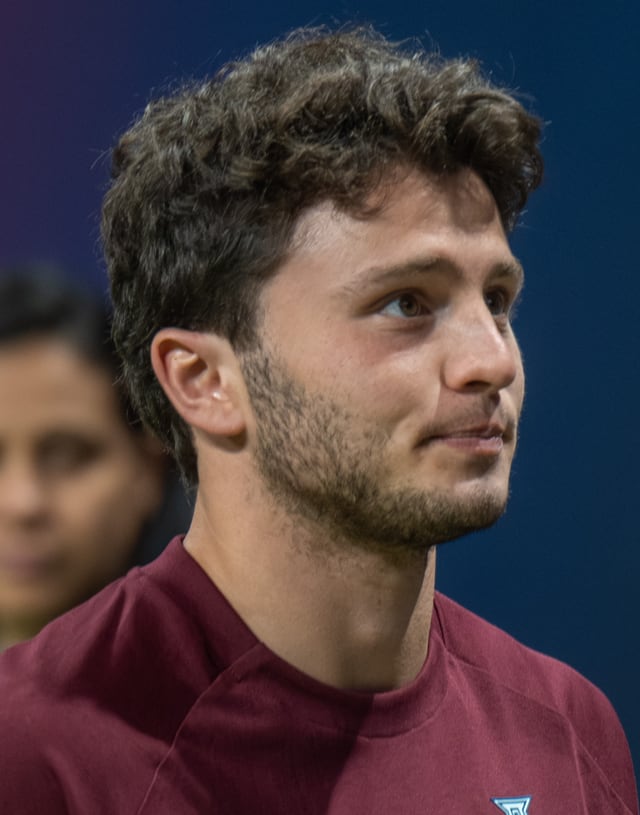
Summary
João Neves compensates for size with anticipation: he reaches loose balls early, presses from useful angles and keeps possession moving before a larger opponent can turn the duel into a wrestling match.
Quick facts
- Position
- Central midfielder
- Current club
- Paris Saint-Germain, number 87 (checked September 23, 2026)
- Date of birth
- September 27, 2004
- Height
- 1.74 m
- Benfica first team
- 75 matches; 2022/23 league and 2023 Super Cup winner
- PSG 2024/25
- 59 matches, seven goals and ten assists, including the 2025 Club World Cup
- Champions League
- Winner with PSG in 2025 and 2026
- World Cup 2026
- Scored on finals debut; Portugal eliminated 1-0 by Spain
The duel often ends before the bodies meet
João Neves sees a pass travel toward an opponent and starts moving before the receiver has controlled it. He arrives from the side, touches the ball away and is already looking for the next PSG shirt. The action appears physical because a challenge has been won. Its decisive part was the reading that happened first.
At 1.74 metres, Neves cannot solve midfield through reach. He solves it by reducing the time in which size matters. Press early, enter on the opponent’s blind side, keep a low centre of gravity and release the ball before the second challenge arrives.
That approach carried him from Benfica’s academy to two Champions League titles with Paris Saint-Germain before his twenty-second birthday. It also made him a starter for Portugal at World Cup 2026, where he scored on debut before the team went out against Spain.
The energy is easy to notice. The more useful question is where he spends it.
2026 Ballon d’Or case
Neves is among the official 2026 Ballon d’Or nominees. His claim is built around the midfield actions that connect Paris’ play: receiving under pressure, reaching the loose ball and closing a passing lane before the next duel starts. They are easier to overlook in a season summary than a striker’s finishing.
The comparison with fellow nominees Vitinha and Fabian Ruiz requires attention to their different jobs. Shared trophies do not make their individual cases interchangeable. Our Ballon d’Or contenders guide places those midfield arguments alongside the forwards, using the same assessment period through July 19.
Tavira was the first stop in a long Benfica education
Neves was born in Tavira, Algarve, on 27 September 2004. He entered Benfica’s development network through Casa Benfica Tavira in 2012 and later trained at the club’s Faro centre.
He moved to the main Benfica Campus in 2016/17. The route matters because he did not arrive at nineteen as a finished transfer prospect. Benfica had watched him pass through each level and understood the technical habits behind the small frame.
Neves joined the under-23 group at seventeen. During the 2021/22 season, he was part of the team that won Benfica’s first UEFA Youth League. He then started the Under-20 Intercontinental Cup final against Peñarol, a 1-0 win in Montevideo.
Youth trophies do not guarantee a senior career. They did give him experience in matches where Benfica expected to control the ball and recover it immediately after losing it. Those demands later made the move into a pressing first team feel coherent rather than accidental.
The first team arrived at the end of 2022
Roger Schmidt gave Neves his official Benfica debut against Braga on 30 December 2022. He entered in the 89th minute, a small first appearance in a season that accelerated quickly.
By February he had played in the Champions League. His first senior goal came in the Lisbon derby against Sporting near the end of the campaign, helping Benfica draw 2-2 before securing the league title in the final round.
The goal attracted attention because it arrived late and in a derby. His route into the team was built on ordinary midfield work: offer a passing angle, react to the turnover and keep the ball moving when the riskier forward pass was not ready.
Benfica won the 2022/23 league, and Neves ended the season as a genuine senior option. The 2023 Super Cup offered the next trophy and a start rather than a late cameo.
He had moved from academy prospect to selection question in a matter of months.
Fifty-five matches removed the prospect label
Neves played 55 times across six competitions in 2023/24. Benfica’s departure record gives him three goals during the season and 75 senior appearances across his full first-team spell.
The volume is the important number. A midfielder can look energetic in fifteen substitute minutes. Starting through league, Champions League, Europa League and domestic cup schedules tests whether that energy remains useful after the novelty disappears.
Opponents began using his size as a target. They tried to receive with their back into him, play over the first press or isolate him under high balls. Neves responded through contact timing and support positions rather than avoiding the contest.
He did not win every duel. No midfielder does. The useful actions were the ones that prevented a duel from becoming a clean opponent possession: a toe on the ball, pressure that forced a backward pass or a recovery that allowed a teammate to collect.
Portugal noticed. Neves made his senior international debut against Bosnia and Herzegovina in October 2023 and went to EURO 2024.
Paris bought a midfielder, not a mascot for intensity
PSG signed Neves on 5 August 2024. He was nineteen, wore number 87 and joined a Portuguese-speaking group that included Vitinha, Nuno Mendes, Danilo Pereira and Gonçalo Ramos.
The easy description was “energy.” That word can flatten a midfielder into somebody who runs while more technical teammates decide the game. Luis Enrique asked for something more demanding.
PSG wanted to dominate possession, counter-press immediately and rotate positions without losing the centre. Neves had to know when to jump toward the ball and when to protect Vitinha’s deeper space. A press launched at the wrong moment would open the lane it was supposed to close.
His short passing also had to survive a team where almost every opponent defended compactly. Moving the ball sideways was not enough; the angle and speed had to prepare the next progressive pass.
He adapted quickly because Benfica had already made those decisions central to his game.
The first Paris season turned work into trophies
PSG’s 2025 award-nomination review credits Neves with 59 appearances, seven goals and ten assists across his first season, including the summer Club World Cup. He helped the club win Ligue 1, the Coupe de France and its first Champions League. These are full-campaign figures, rather than the earlier squad-page snapshot taken before the Club World Cup.
The European campaign measured his role more clearly than a highlight package. UEFA recorded 184.3 kilometres covered across 17 appearances, the highest distance total of any player in the competition.
Distance alone does not prove quality. A midfielder can run because the team has lost control. Neves’ number mattered because it accompanied PSG’s control and recovery work all the way to the final.
UEFA also lists him as the competition leader with 47 tackles. The tally shows how often he intervened directly to stop an opponent. Neves did not avoid contact; he chose how to enter it.
Gianluigi Donnarumma supplied the final line of protection behind that midfield during the 2025 breakthrough. PSG beat Inter 5-0 in the final and changed the standard for the next season from chasing Europe to defending it.
Vitinha and Neves divide the centre without fixing it
Vitinha often begins as PSG’s deepest midfielder. Neves plays beside or slightly ahead of him, with Fabián Ruiz or another midfielder completing the triangle.
The positions are not frozen. Neves can drop to receive from a centre-back while Vitinha moves away from pressure. On the next attack, Vitinha may hold the base while Neves runs into the right half-space.
This movement helps PSG keep short connections. If a full-back advances, the nearest midfielder can cover behind him. If Ousmane Dembélé moves inside, Neves can play around the overload or arrive after the defence follows the forward.
The partnership works because both midfielders process the ball quickly. Neither needs several touches to show control. They can exchange positions without turning every possession into an individual dribble.
The risk comes when both move toward the same action. One missed challenge can leave the centre open. Communication and spacing make the aggression sustainable.
Pressing begins with the lane he leaves open
Neves does not run directly at every receiver. He curves the approach so one passing route remains available and another disappears.
That is how a coordinated press sets a trap. The opponent sees the apparently safe pass and plays it toward the teammate PSG is ready to surround. Neves may not make the final tackle, but his first movement shaped where the ball went.
When he does challenge, he stays low and tries to place a foot across the ball rather than collide squarely with a larger player. The body contact follows the touch instead of replacing it.
His recovery speed helps after a miss. He can turn and press the second action, which is essential because an aggressive midfielder will sometimes be bypassed.
The weakness is visible against fast switches. If Neves has committed to one side and PSG cannot delay the pass, the far half-space may open. The team needs the winger, full-back and deeper midfielder to move with him.
Intensity only works when several players share the same map.
Short passes can be progressive without travelling far
Neves is not a midfielder who measures influence through repeated forty-metre diagonals. Much of his progression happens through short passes played at an angle that changes the next receiver’s view.
A square pass leaves a teammate facing the same pressure. A pass into the front foot can let that teammate turn or play forward first time. The distance may be ten metres; the effect is a line broken on the following action.
Neves also uses bounce passes. He plays into a forward, keeps moving and receives the return beyond the opponent who stepped toward the first ball.
This is why his activity can look simple while PSG take control. He is often the connector rather than the player claiming the final assist.
There are moments when safety becomes too comfortable. A midfielder in a dominant team must recognise when the vertical ball is available and accept that some attempts will fail. Neves’ best matches mix quick circulation with passes that make the opponent turn.
Aerial timing changes the size argument
At 1.74 metres, Neves should not be PSG’s main answer to high central balls. He can still win headers by arriving before a stationary opponent has jumped.
Timing and body position matter. He tracks the flight, establishes a small pocket of ground and attacks the ball rather than waiting under it. The opponent may be taller but cannot use the full reach if the contest begins late.
The same timing appears in the penalty area. Neves is rarely the first player a defence marks at a corner. He can move away from the crowd, attack a flick or arrive behind a larger teammate.
In 2025/26, those movements produced several striking goals. The most memorable night came at Toulouse, where he scored PSG’s first senior hat-trick by a midfielder. Two goals were overhead kicks; the third was driven into the top corner from distance.
It was spectacular and unusual. It did not transform him into an attacking midfielder whose value should be judged by hat-tricks.
The Toulouse hat-trick added a new scoring route
PSG won 6-3 at Toulouse in August 2025. Neves scored in the seventh, fourteenth and seventy-seventh minutes, completing the first hat-trick of his senior career.
The first two finishes began with chest control and overhead kicks. Repeating the action in one match made the night feel improbable even before the long-range third goal.
The goals showed that Neves could exploit the space opponents gave him in the box. Defences were occupied by Dembélé, Bradley Barcola and Désiré Doué. A midfielder arriving after them was not always the first marking priority.
Later in the season, Neves scored a stoppage-time header to beat Lyon and found more set-piece opportunities. The increase did not require him to abandon the midfield base. It rewarded runs made after PSG had already established control.
Scoring improves his range. Chasing the box on every attack would remove the balance that lets others stay there.
PSG retained Europe with Neves in the final
The 2025/26 Champions League defence was less smooth than the first title run. PSG finished eleventh in the league phase and needed a knockout play-off.
The team then eliminated Monaco, Chelsea, Liverpool and Bayern Munich. Neves scored in the 5-4 semifinal first-leg win over Bayern, heading in Dembélé’s corner to put Paris 2-1 ahead.
Luis Enrique started him in the final against Arsenal beside Vitinha and Fabián Ruiz. PSG fell behind early, equalised through Dembélé and won the penalty shootout 4-3 after a 1-1 draw.
The result made PSG the second club to retain the trophy in the Champions League era. It also gave Neves two European titles before his twenty-second birthday.
Medal count can hide role. He was not an unused young squad member collecting honours around established stars. He had started both the semifinal pressure and the final midfield contest.
PSG also retained Ligue 1, giving the season a domestic and European foundation even before the additional super cups are counted.
Portugal first used him as a flexible midfield piece
Neves entered a Portugal midfield already containing Bruno Fernandes, Vitinha, Bernardo Silva, João Palhinha and Rúben Neves. He did not need to become the sole organiser immediately.
At EURO 2024, he appeared during a run that ended against France in the quarter-final. The 2025 Nations League gave him a larger role. He started the final against Spain at right-back before Nélson Semedo replaced him at half-time. Portugal twice came from behind and eventually won 5-3 on penalties after a 2-2 draw.
The final also showed the limits of describing every Portugal appearance as a midfield role. His starting position and defensive assignments changed with the national team’s selection.
World Cup qualification added an unexpected scoring display. Neves scored a hat-trick in a 9-1 win over Armenia that secured Portugal’s place at the finals.
Three international goals in one match did not change his position. They did show that his later box arrivals were becoming repeatable across teams.
The World Cup debut supplied a goal and a warning
Portugal opened World Cup 2026 with a 1-1 draw against DR Congo. Neves scored with a flicked header and was named Player of the Match after completing 97 percent of his passes.
The goal was an ideal summary of his recent development: a midfielder arriving in the area, judging the ball earlier than the defender and finishing despite the height difference.
The result was less convincing. Portugal had the technical quality to control possession but did not turn it into a win. A strong individual debut could not hide the team’s unfinished attack.
Portugal’s run ended in the last 16 with a 1-0 defeat to Spain on July 6. Neves started, but Mikel Merino’s stoppage-time winner closed his first World Cup before the quarter-finals.
That is why he sits eighth in our young World Cup 2026 players ranking. His midfield control and debut goal belong in the top ten. Spain’s young players completed a title run, while Portugal’s tournament ended much earlier.
The ranking evaluates one competition. It does not cancel two Champions League seasons.
The next challenge is choosing when not to chase
Neves has already proved that size does not stop him winning elite midfield duels. His next improvement concerns selection rather than courage.
When PSG lose the ball, should he attack the receiver or protect the pass behind him? When the forward line pins the defence, should he enter the box or remain available for the second ball? When a vertical pass is possible, is the risk worth leaving the centre exposed?
The answers change with score, teammate positions and opponent. A midfielder who always runs forward can become predictable. A midfielder who always protects can drain the urgency from the press.
Neves’ best quality is not endless motion. It is arriving early enough to make the right action look simple.
Benfica taught the habit, PSG placed it inside a European champion and Portugal gave it a World Cup. The next stage is to keep the aggression while becoming even more selective about where it lands.
Sources
Sources checked
- PSG - Complete 2024/25 record in the 2025 award nominations
- UEFA - 2024/25 Champions League tackles and distance statistics
- UEFA - Paris 5-4 Bayern, 2026 semifinal first leg
- PSG - Neves hat-trick sends Portugal to the World Cup
- PSG - Portugal's World Cup last-16 exit against Spain
- PSG - Neves' late winner at Lyon
- UEFA - Official 2026 Ballon d'Or shortlist
- Paris Saint-Germain - João Neves first-team profile
- Paris Saint-Germain - 2026/27 men's squad
- Paris Saint-Germain - João Neves' first Ligue 1 hat-trick
- Paris Saint-Germain - back-to-back Champions League title
- Benfica - João Neves academy and first-team record
- UEFA - 2024/25 Champions League season in numbers
- UEFA - Paris retain the Champions League in 2026
- UEFA - Portugal win the 2025 Nations League
- Ligue 1 - João Neves scores on his World Cup debut
FAQ
Which club does João Neves play for?
João Neves plays for Paris Saint-Germain and wears number 87. He joined from Benfica in August 2024 and remains in PSG's 2026/27 first-team squad.
What position does João Neves play?
He is a central midfielder who can play beside or ahead of a holding player. At PSG, Vitinha often provides the deepest reference while Neves presses, connects possession and arrives higher.
How tall is João Neves?
PSG lists him at 1.74 metres and 66 kilograms. His game relies on timing, balance and positioning rather than trying to win every duel through reach.
What did João Neves win with PSG?
He won Ligue 1, the Coupe de France and Champions League in his first PSG season, then helped the club retain both the French league and Champions League in 2025/26.
How did João Neves perform at World Cup 2026?
He scored a header on his World Cup debut against DR Congo and was named Player of the Match. Portugal's run later ended with a 1-0 knockout defeat to Spain.
What are João Neves' main strengths?
His main strengths are scanning, pressing angles, fast short passing, recovery work, timing in ground and aerial duels, and late runs into the penalty area.