
player
Ronaldo Nazario: R9, Brazil and the Striker Peak
Ronaldo Nazario's career through Brazil, Barcelona, Inter and Real Madrid, with the acceleration, finishing, injuries and 2002 World Cup comeback behind R9.
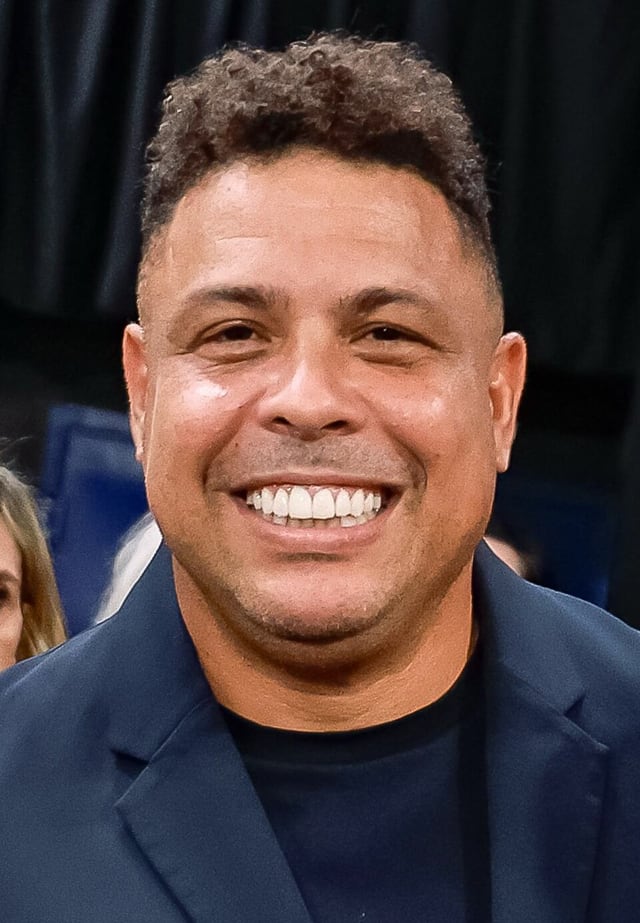
Summary
R9's case begins with a rare combination of sprint speed, close control and one-on-one finishing, then grows through the way he rebuilt a world-leading scoring role after serious knee injuries.
Quick facts
- Primary role
- Striker
- Known as
- R9 / O Fenômeno
- Defining clubs
- Barcelona, Inter and Real Madrid
- National team
- Brazil
- World Cup record
- Winner in 1994 and 2002; 15 goals across 1998, 2002 and 2006
- Real Madrid record
- 177 official matches and 104 goals
Ronaldo Nazario, R9 and the name
Ronaldo Luís Nazário de Lima is the Brazilian striker known as Ronaldo, R9 or O Fenômeno. He is not Cristiano Ronaldo, the Portuguese forward whose career belongs to a later generation. The distinction matters in search results and statistics, but it also separates two very different attacking profiles.
R9 played through the centre and attacked defenders with the ball at his feet. At his peak, he could receive outside the penalty area, accelerate past the first challenge and still keep enough control to choose his finish. That complete carrying game is why easy comparisons with a compact young finisher such as Endrick need restraint. Ronaldo’s case as one of the game’s defining strikers rests on that pre-injury explosion and on the scoring role he rebuilt afterward.
Our best football players of all time ranking weighs the whole career. This profile asks a more useful first question: what made Ronaldo’s version of centre-forward play so difficult to defend?
From Cruzeiro to a one-season Barcelona explosion
Ronaldo entered senior football with Cruzeiro before PSV signed him as a teenager. The route established the pattern early. He was not only waiting for service between the posts. He could carry the ball from a deeper starting point, eliminate a defender and turn a developing attack into a direct run at goal.
Barcelona signed him in 1996. He stayed for one season, yet the period became one of the clearest pictures of his physical and technical peak. Inter’s retrospective records 47 goals in 49 matches across that Barcelona campaign. The scope is all matches in the club season, not a league-only total.
The famous run against Compostela captures why numbers alone do not explain the player. Ronaldo protected the ball through contact, accelerated away from several challenges and finished without losing control of his stride. The action looked improvised, but its parts were repeatable: strength through the first collision, fast touches once space opened and calm at the finish.
Inter and the peak before injury
Inter signed Ronaldo in 1997. He immediately moved into a league that placed heavy tactical and physical demands on central forwards. The change did not remove his freedom with the ball. Inter’s Hall of Fame description focuses on the combination of speed and technique that made an apparently crowded route toward goal feel open.
He helped Inter win the 1997/98 UEFA Cup. In the final against Lazio, Ronaldo isolated goalkeeper Luca Marchegiani, used a sequence of body feints without touching the ball and then finished into the empty side of the goal. It is a small masterclass in goalkeeper manipulation: the decisive movement came from the striker’s body before the final touch.
Inter record 59 goals in 99 appearances across his five seasons. Injuries explain the low appearance total as much as selection or form. The club years contain both the most complete version of the young striker and the disruption that changed the rest of his career.
What the knee injuries changed
Ronaldo suffered a serious knee-tendon injury in November 1999 and another major setback during his return. FIFA’s account describes two and a half years away from Brazil duty before he reappeared shortly before the 2002 World Cup squad was selected.
The medical story should not become spectacle. The footballing effect is the important part. Before the injuries, Ronaldo could repeatedly start farther from goal and trust the first acceleration to separate him. Afterward, he became more selective. He still carried the ball, but he relied more on positioning, shorter bursts and finishing efficiency.
That adjustment is central to his legacy. The comeback was not a perfect restoration of the same body. It was a redesign of the striker role around the qualities that remained: anticipation, balance, composure and the ability to read the goalkeeper.
Playing style: speed with options
Ronaldo’s acceleration was frightening because the ball travelled with him. Fast forwards can create separation and then need an extra touch to regain control. Ronaldo’s stride and touches often stayed connected, allowing him to change direction while the defender was already running toward his own goal.
He could finish with either foot and did not depend on one preferred picture. An early shot punished a goalkeeper who waited for the dribble. A touch around the keeper punished an early commitment. A finish across goal punished a defender protecting the near post. The options made the first burst more dangerous because opponents could not defend only the sprint.
His strength also mattered. Ronaldo could ride contact without turning his body completely away from goal. That allowed him to keep the next action alive instead of merely winning a foul. In combinations, he was capable of playing a short pass and continuing forward, although creation was support for the central threat rather than the organising purpose of his game.
This is why he leads our best football strikers of all time ranking. The category rewards what a centre-forward can do to a defensive line, and peak Ronaldo made a stable line feel temporary as soon as he received facing forward.
Four World Cups, three scoring tournaments
Ronaldo travelled to the 1994 World Cup as a 17-year-old squad member. Brazil won the title, but he did not play. That medal belongs in his honours without being presented as tournament performance evidence.
Romario and Bebeto carried the scoring responsibility in that team. For Ronaldo, 1994 was an apprenticeship inside the winning squad rather than the first chapter of his own World Cup performance record.
In 1998, he became Brazil’s central striker and scored four goals on the way to the final. The tournament ended with a 3-0 defeat to France after a confused build-up around his fitness and place in the team. The final remains part of his story, but it should not erase the attacking work that took Brazil there.
The strongest chapter came in 2002. Ronaldo returned to the national team shortly before the tournament and scored eight goals as Brazil won every match. He scored in every game he played except the quarter-final against England, then struck both goals in the 2-0 final win over Germany. FIFA records the eight-goal line and the Golden Boot.
Rivaldo and Ronaldinho gave the attack creativity and movement around him. That context matters: Ronaldo was the decisive finisher in a high-quality front line, not a solitary rescue act. His achievement was turning the chances and transitions of that team into a title-winning scoring run after such a long absence.
He added three goals in 2006, taking his career World Cup total to 15. That was the men’s tournament record at the time. Miroslav Klose passed it in 2014, before Messi and Mbappe moved above both players in 2026. The current World Cup all-time scorers table supplies the modern order; Ronaldo’s 15 remain evidence across three editions, with the 2002 peak carrying the greatest weight.
Real Madrid and the later striker
Real Madrid signed Ronaldo after the 2002 World Cup. The club’s legend profile records 177 official matches and 104 goals between 2002 and 2007. Those are Real Madrid-only figures and should not be mixed with broader career totals.
The later version did not reproduce every long carry of Barcelona or early Inter. He remained dangerous because his first steps, positioning and finishing decisions still created separation. A defender could contain the route from midfield and still lose him across the last few metres.
Ronaldo later played for AC Milan and Corinthians before retiring in 2011. Those chapters complete the chronology, but the all-time argument rests mainly on the early club peak, the Inter interruption, the 2002 reconstruction and sustained scoring at Real Madrid.
Ranking context
Ronaldo’s place among the greatest World Cup players joins two kinds of evidence: the painful 1998 ending and the eight-goal response in 2002. His broader all-time case is less tidy than a career built without interruption, which is exactly why peak and longevity can move him differently across rankings.
The durable point is the striker model. R9 could create the separation, carry the ball through it and choose the finish after the defence had already lost balance. The injuries reduced how often that full sequence appeared. They did not remove the evidence that, at his best, almost every stage of the chance could belong to the same centre-forward.
Sources
Sources checked
FAQ
Is Ronaldo Nazario the same person as Cristiano Ronaldo?
No. Ronaldo Luís Nazário de Lima is the Brazilian striker known as Ronaldo, R9 or O Fenômeno. Cristiano Ronaldo is the Portuguese forward whose senior career began later.
How many World Cups did Ronaldo Nazario win?
Ronaldo was part of Brazil's winning squads in 1994 and 2002. He did not play in 1994; in 2002 he scored eight goals, including both goals in the final against Germany.
Which clubs did Ronaldo Nazario play for?
His senior club route ran through Cruzeiro, PSV, Barcelona, Inter, Real Madrid, AC Milan and Corinthians.
What made Ronaldo Nazario such a dangerous striker?
He combined explosive acceleration with close control, balance and several finishing options. A goalkeeper or defender had to react before knowing whether he would shoot, round the keeper or touch the ball across the challenge.