
player
Thierry Henry: Arsenal's Left-Channel Striker
Thierry Henry's career from Monaco and Juventus to Arsenal, Barcelona and France, with the left-channel movement behind his goals and assists.
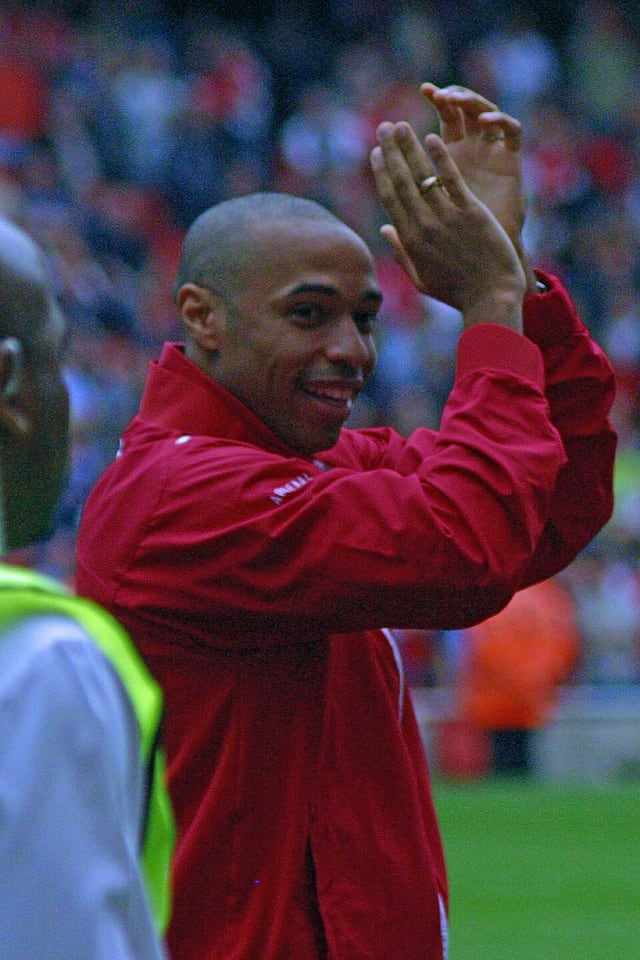
Summary
Henry became Arsenal's record scorer without giving up the instincts of a winger. Starting left let him see the defender's turn, attack the open lane and choose between the far corner and the final pass.
Quick facts
- Primary role
- Forward / left-channel striker
- Main club
- Arsenal
- Arsenal record
- 228 goals in 377 appearances across all competitions
- Premier League record
- 175 goals and 74 assists in 258 appearances
- France record
- 51 goals in 123 senior matches
- Profile
- Fast right-footed scorer and creator who attacked from the left
The striker who started on the left
No one has scored more goals for Arsenal than Thierry Henry. Still, the standard picture of a centre-forward does not quite fit. Henry preferred to start on the left, facing the play and watching which way the defender turned.
Arsenal’s books give him 228 goals in 377 appearances across two spells. His Premier League line is 175 goals and 74 assists in 258 games. Many of those goals and assists began with the same run, so separating the scorer from the creator misses the fun of watching it develop.
Receiving wide left, Henry made a full-back pick a bad option. Give him the touchline and he had room to sprint. Turn toward the centre and the route to the far corner opened. A second defender might close that route, but then a teammate was free for the square pass.
He could do a striker’s damage without standing in a striker’s usual place.
Monaco came before the conversion
Henry’s senior career began at Monaco. Arsene Wenger gave him his first-team debut there, but the young forward was used mainly from wide positions. Pace was the obvious feature. Learning when to use it took longer.
For a teenager who liked open grass and wanted the play in front of him, the role made sense. It taught Henry to carry the ball at speed while keeping an eye on the covering defender. He could release a pass without first moving into the centre.
France took him to the 1998 World Cup, where he scored three times and became a champion at 20. The medal arrived before he had even settled on the club position people now associate with him.
Juventus signed him early in 1999 and kept him on the flank. Seven months in Italy produced little worth romanticising, but it is also a small sample on which to build a failure story. Arsenal simply found a better use for the skills he already had.
Wenger moved him through the middle
Arsenal signed Henry in August 1999. Wenger knew him from Monaco and believed the winger could score through the middle. The Premier League’s Hall of Fame profile describes the conversion and adds an important detail: Henry still liked starting from the left.
The first weeks looked awkward. He had to receive with his back to goal, judge centre-backs at close range and find the right moment in a busier part of the pitch. Seven Arsenal appearances passed before his first goal.
After that first goal, the new position began to make sense. Henry drifted away from the centre-back before the pass, received while moving and entered the box facing goal. Arsenal had placed him centrally without taking away his runway.
Wenger had not erased the winger. He had changed the destination of the run.
How the left channel worked
The familiar Henry finish began well before he opened his right foot. He received outside the left edge of the box, or ran onto a pass there, while the defender turned toward his own goal. Henry stayed side-on and could see the goalkeeper as well as the runners joining him.
His right foot opened the far corner. A small touch inside placed the ball beyond the defender’s front foot, then the finish could curl across goal. Goalkeepers saw the pattern many times and still struggled to close the angle.
His speed was obvious. The pause before it was often worse for the defender. Henry waited until both feet were planted, then took the next yard. Because he carried the ball with his head up, an early second defender merely pointed out the pass across the area.
The goal and the assist were two endings to one setup.
Goals and assists in the same attack
Henry scored 175 Premier League goals for Arsenal. He also supplied 74 assists, including 20 in 2002/03. The latter was the competition’s single-season record at the time.
Calling Henry unselfish does not say much. Twenty assists beside 24 league goals does. The scoring route itself drew defenders across and opened the pass; creation was part of the threat, not the consolation when a shot disappeared.
He won four Premier League Golden Boots. The sequence covered 2001/02, 2003/04, 2004/05 and 2005/06, with more than 20 league goals in five consecutive seasons. Arsenal could change the supporting cast while the left-sided problem remained.
Across all competitions and both Arsenal spells, the figures are 228 goals in 377 appearances. That is a different scope from his Premier League record, so the two lines should not be blended.
The Invincibles season
Arsenal won the league and FA Cup double in 2001/02. Two years later, Wenger’s side completed all 38 Premier League matches without defeat. Henry won the Golden Boot as the Invincibles took 26 wins and 12 draws.
Arsenal did not funnel every move toward one man. Robert Pires came inside from the opposite side, Dennis Bergkamp found passes between the lines and Patrick Vieira carried the ball out of midfield. When the team needed the quickest route forward, Henry supplied it.
The Arsenal club profile covers the wider history of that side. Henry’s part was more specific. Opponents could defend deep to remove the space behind, but that gave Bergkamp and the midfield longer on the ball. Step up, and Henry had the race he wanted.
Europe left a gap in the Arsenal years. The club reached the 2006 Champions League final and lost 2-1 to Barcelona. Henry departed the following year as Arsenal’s record scorer, but without the European Cup he had wanted in north London.
France asked for a different balance
The French Football Federation records 51 goals from Henry’s 123 senior appearances between 1997 and 2010. He won the 1998 World Cup, EURO 2000 and the 2003 Confederations Cup.
France could not simply copy Arsenal’s left channel. The national side had different forwards and midfield shapes, plus much less training time. Depending on the tournament, Henry led the line, started wide or worked around a partner.
The 1998 side was organised around defensive security and Zinedine Zidane as the central creator. By EURO 2000, France attacked with more freedom and Henry scored three times. His national-team career contains both versions, plus the frustrations that followed later.
When Henry retired from international football, fifty-one was the France men’s record. Others have since passed it. That line covers 123 senior matches across thirteen years.
Barcelona required another adjustment
Henry joined Barcelona in 2007. The move placed him in a front line with Lionel Messi and Samuel Eto’o, then inside Pep Guardiola’s more demanding positional structure.
At Arsenal, moving left often let Henry set the terms. Barcelona sometimes asked him to stay wide for another pass, clear space with a run or wait while the ball travelled through midfield. He knew the lane. The new part was waiting for the team to release him into it.
The adjustment paid off in 2008/09. Barcelona won La Liga, the Copa del Rey and the Champions League, then completed the six-trophy year. Henry scored twice in the 6-2 league win at Real Madrid and played his part in a front three that could attack from several angles.
Barcelona’s legend profile records 49 goals in 121 official appearances. Those are official-match figures. Broader archive totals that include unofficial games should not be mixed into the line.
His honours from the spell include two Liga titles and the Champions League, Copa del Rey, Club World Cup, Spanish Super Cup and UEFA Super Cup. The Barcelona club profile places that 2009 side inside the club’s longer tactical history.
New York and one more Arsenal goal
Henry moved to New York Red Bulls in 2010. The later career changed the physical balance of his game. There were fewer long sprints, more moments receiving between lines and more responsibility for shaping an attack before entering the box.
A short Arsenal loan in 2012 produced the reunion people remember. Henry came off the bench against Leeds in the FA Cup, moved into the old left channel and finished across the goalkeeper. It was his 227th Arsenal goal. He added one more before returning to New York.
People loved the goal because they recognised it immediately. The legs were older; the picture and the choice were the same.
Why Henry belongs among strikers
Any all-time striker ranking needs room for forwards who refused to spend every attack between two centre-backs. Henry is the obvious test.
He scored at a centre-forward’s rate while creating from a winger’s starting position. Four Premier League Golden Boots show the finishing. Seventy-four league assists show what happened when defenders closed the shot. Arsenal’s record shows how long both parts lasted.
Ronaldinho offered more of his game between midfield and attack. Harry Kane developed into a striker who could drop deep and pass runners through. Henry’s route was different: begin left, force the turn, then decide whether the move ended with his shot or somebody else’s.
Defenders knew the foot and could guess the corner. They still had to turn quickly enough to do something about it.
Sources
Sources checked
FAQ
How many goals did Thierry Henry score for Arsenal?
Arsenal records 228 goals in 377 appearances across all competitions and both of Henry's spells. He remains the club's all-time leading scorer.
What position did Thierry Henry play?
Henry was a forward. Arsene Wenger converted him from a winger into a striker at Arsenal, but he often began from the left before moving inside to shoot or create.
How many Premier League Golden Boots did Thierry Henry win?
Henry won four Premier League Golden Boots, in 2001/02, 2003/04, 2004/05 and 2005/06.
How many goals did Thierry Henry score for France?
The French Football Federation records 51 goals in 123 senior appearances between 1997 and 2010.
Did Thierry Henry win the Champions League?
Yes. Henry won the 2008/09 UEFA Champions League with Barcelona as part of the club's treble. He had previously lost the 2006 final with Arsenal against Barcelona.