
player
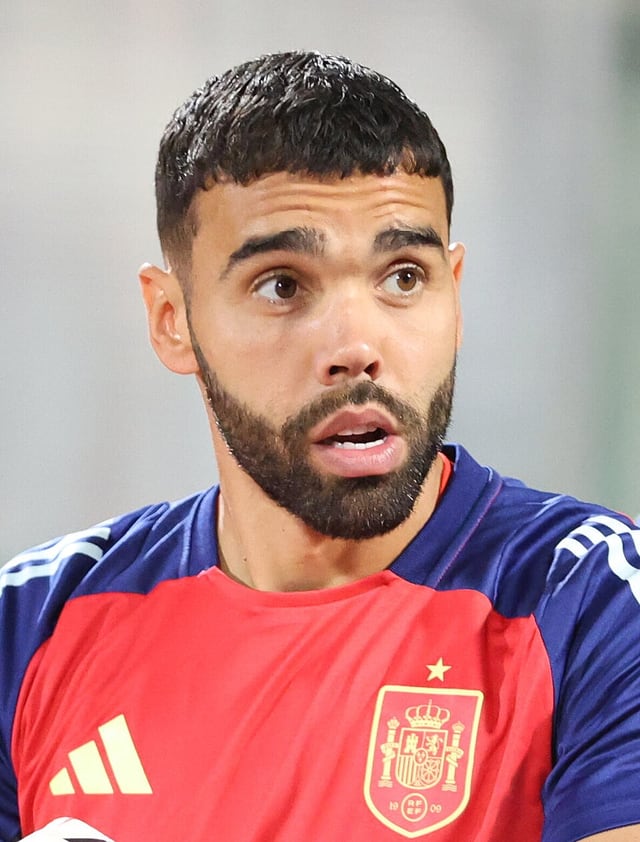
David Raya: The Goalkeeper Who Starts the Attack
David Raya's Arsenal, Brentford, Blackburn and Spain career, with three straight Golden Gloves, his distribution and 2025/26 title role explained.
Summary
David Raya does not wait for Arsenal's attack to begin elsewhere: he draws the press, chooses the short or long route and gives a possession-heavy team control before the ball reaches midfield.
Quick facts
- Position
- Goalkeeper
- Current club
- Arsenal (checked September 30, 2026)
- 2025/26 Premier League
- Champion; 19 clean sheets in 37 appearances
- Golden Gloves
- Three consecutive Premier League awards, 2023/24-2025/26
- Spain record
- 12 senior appearances through June 8, 2026
- International honours
- EURO 2024 and World Cup 2026 squad winner; no World Cup appearance
- Profile
- Short buildup, long distribution, high claims and patient one-on-ones
Arsenal can begin an attack inside his penalty area
David Raya often receives the ball with an opponent running at him and two centre-backs standing a few yards away. The safe action appears to be an immediate clearance. He waits.
That pause is part of Arsenal’s buildup. If the forward continues toward Raya, a teammate becomes free. If the press stays compact around midfield, he can send a longer pass over it. The goalkeeper is not decorating possession with extra touches. He is asking the opponent to choose which space to leave.
Raya’s three consecutive Premier League Golden Gloves make him sound like a conventional clean-sheet specialist. The more interesting part of his case is that he has earned them inside a team that wants the goalkeeper involved before a save is required. His distribution-led role differs from the late-game resistance associated with Emiliano Martínez. In 2025/26, Arsenal finally joined control to the result that had escaped them: a league title.
Futsal came before Blackburn
Raya was born in Barcelona on 15 September 1995 and grew up in Pallejà. He played futsal with friends and did not spend every game in goal. That matters because his comfort with the ball was learned as play, not added later as a specialist exercise.
Brentford’s account of his development says he moved to Blackburn Rovers after a successful trial in 2011. He was sixteen, leaving Spain for an English academy without the status that usually follows a famous teenage signing.
The route to Blackburn’s first team included a loan at Southport in the fifth tier. The pitches, pressure and direct attacks were far removed from the polished buildup now associated with Arsenal. For a young goalkeeper, that was useful. He had to judge crosses in crowded areas, deal with second balls and accept that the next pass was not always short.
Raya became Blackburn’s regular goalkeeper in 2017/18 and helped the club win promotion from League One. By the time Brentford signed him in 2019, his distribution was an established strength rather than a promise based on academy footage.
Brentford turned the long pass into a weapon
Brentford’s 2019/20 season ended in a Championship playoff-final defeat to Fulham. Raya still kept 16 league clean sheets and shared the division’s Golden Glove. A year later, Brentford returned to Wembley and beat Swansea City to reach the Premier League after a 74-year absence.
The goalkeeper’s role suited a side prepared to change routes. Raya could play into a defender, clip the ball toward a full-back or drive it beyond the first line toward a forward. The long pass was not an admission that buildup had failed. It was one of the planned answers.
His own explanation connects that range to the futsal court. Outfield touches made receiving and striking the ball feel normal. Blackburn and Brentford added the tactical question: where should the pass go once a team tried to press him?
Brentford’s official profile records 20 clean sheets in 62 Premier League appearances. It also notes that Raya made 154 saves in 2022/23, ten more than any other goalkeeper in the division. That season proved he could handle volume before Arsenal asked him to succeed in games with much less of it.
Arsenal chose a fit, not an emergency
Arsenal already had Aaron Ramsdale when Raya arrived on loan in August 2023. Ramsdale had played every league match of the previous campaign and signed a new contract. Mikel Arteta’s decision was therefore not a response to an empty position.
Raya started four league matches into the season and kept the place. The change became a weekly debate because goalkeepers rarely rotate without a clear injury or loss of form. Arsenal were choosing between two capable players, and every uncertain catch or pass was treated as evidence in the argument.
The tactical preference became easier to see over time. Premier League analysis of their early Arsenal samples found Raya more involved in possession, more accurate over long distances and more willing to wait for pressure before releasing the ball. He gave Arsenal both a spare short passer and a direct route when an opponent crowded the centre.
That is a different idea from asking a goalkeeper to complete the safest pass available. Raya helps determine which pass becomes available.
The first Golden Glove arrived on loan
Raya kept 16 clean sheets in 32 Premier League matches during 2023/24. No other goalkeeper matched the total, even though he missed six games, and the Golden Glove was secured before the final weekend.
Clean sheets belong partly to the defence. William Saliba and Gabriel Magalhães protected the centre, Arsenal controlled territory and opponents often had few attacks. Raya’s part was to keep the quiet game quiet. One poor decision after seventy uneventful minutes can undo the structure built in front of him.
His handling of crosses helped. Raya is 1.83 metres tall, smaller than several elite goalkeepers, yet the 2022/23 Premier League comparison with Ramsdale credited him with 52 high claims to Ramsdale’s 22. Timing, starting position and the decision to attack the ball can compensate for a height difference.
Arsenal made the transfer permanent in July 2024. The first season had moved the conversation from whether Raya deserved to start toward why his particular skills matched Arteta’s team.
Two saves against Porto changed a European night
The clearest shot-stopping proof of that first Arsenal season came after 120 minutes against Porto. The Champions League round-of-16 tie finished 1-1 on aggregate and went to penalties at Emirates Stadium.
Raya saved from Wendell, reaching left and pushing the ball onto the post, then denied Galeno to end the shootout. UEFA named him Player of the Match. Arsenal reached the quarter-finals for the first time in fourteen years.
Penalty shootouts are a narrow test. They do not prove who is the better goalkeeper across a season, and a shooter’s miss can be mistaken for a save. Here the evidence is clean: two attempts were stopped, and both were necessary to finish a 4-2 shootout win.
The moment also corrected an easy caricature. Raya had been recruited partly for his feet, but Arsenal’s European progress ended in his hands.
Three Golden Gloves, three different seasons
The first award came with 16 clean sheets in 2023/24. Raya shared the second with Nottingham Forest’s Matz Sels after both recorded 13 in 2024/25. Then came 19 in 37 appearances during 2025/26, four more than runner-up Gianluigi Donnarumma.
Only Pepe Reina, Joe Hart and Ederson had previously won three consecutive Premier League Golden Gloves. Raya joined them while producing his highest total in the third season.
The sequence should not be read as three identical performances. Arsenal’s defensive personnel, opponents and share of possession changed. So did the number of saves. In 2025/26, eighteen league goalkeepers made more than Raya’s 60 saves. He was not winning the award through constant emergency work.
That low volume makes isolated actions more important. A goalkeeper facing six shots can build rhythm. A goalkeeper facing one serious chance after a long quiet spell has no such help.
The save at West Ham belonged to a title race
Arsenal went to West Ham in May 2026 with the league lead but no guarantee that a long wait was over. The match was still goalless when Mateus Fernandes broke through in the 78th minute.
Raya held his ground until the shooting action began, then stepped forward into a spread shape. His right leg blocked the finish. Premier League analysis estimated that the shot would be saved 41 percent of the time.
Arsenal won 1-0. One save did not deliver a 38-game title, but this one protected two points at the stage when every result could change the table. Raya completed the season with 19 clean sheets, and Arsenal finished on 85 points, seven clear of Manchester City.
The title ended a 22-year wait. It also gave the Golden Glove sequence its missing team result. In the wider Arsenal story, Raya is the goalkeeper who arrived during three consecutive second-place finishes and remained in goal when the team finally moved one place higher.
How the distribution changes the press
Raya can play short with either foot, but the useful detail is the distance he can reach without a long preparation. A forward closing him down has to respect the possibility that the ball will travel beyond the press.
Arsenal use that threat to create uncertainty. If the opponent pushes an extra player forward, Raya can target a teammate farther up the pitch. If the back line drops to protect against that pass, the centre-backs receive with more room.
He will sometimes hold the ball long enough to make supporters uncomfortable. The pause is productive only while he remains aware of the pressure angle and the teammate behind it. A mistimed touch near goal carries an obvious cost, which is why distribution should be judged by the space it creates rather than by bravery alone.
Raya is also prepared to vary the height and pace of the pass. A clipped ball toward the touchline asks for a different duel from a flat strike into a forward. That variety keeps Arsenal from becoming a short-passing exercise an opponent can rehearse.
Claiming crosses without the tallest frame
Raya’s hands are unusually large, a detail that has become part of his public image, but catching in traffic depends on the route to the ball. He starts early, uses a raised knee to protect his space and tries to meet the cross before it falls into a crowd.
There is risk. Leaving the line turns a misjudgment into an open goal, and Premier League set pieces create contact around the goalkeeper. Raya’s willingness to claim still gives Arsenal value. A catch ends the attack; a punch or passive stay can leave another phase.
The same decisiveness appears outside the six-yard box. He is not a sweeper in the exaggerated sense of spending every possession near midfield, but he supports a high line and clears passes before the forward can set up a shot.
With Alisson Becker, that activity is joined to outstanding one-on-one saving. Raya’s distinction is the way aerial command and distribution fit Arsenal’s territorial control. The two keepers solve many of the same modern tasks with different physical profiles.
Spain has two excellent answers
Raya made his Spain debut against Albania in March 2022. RFEF lists 12 senior appearances through the June 8, 2026 match against Peru.
He played once at EURO 2024, keeping a clean sheet against Albania after Spain had already qualified from the group. Spain won the tournament with Unai Simón as the first-choice goalkeeper. Raya was also part of the 2026 World Cup-winning squad but did not appear.
That last line needs to stay precise. A squad winner receives the medal and contributes to the tournament group; it is not the same achievement as starting the matches. Unai Simón played throughout the World Cup, kept seven clean sheets and won the Golden Glove.
Spain’s choice does not invalidate Raya’s club form. International selection asks about the coach’s relationships and tactical preference as well as league awards. It does explain why Simón ranks first and Raya second in our current goalkeeper list.
Second in the world-right-now ranking
Raya is No. 2 in The Top Football’s best goalkeepers in the world right now ranking after the 2025/26 season and World Cup. His domestic evidence is the strongest on the page: champion, 19 clean sheets and a third straight Golden Glove.
Simón leads because the World Cup supplied the higher international peak. Thibaut Courtois sits fourth with a different argument built around high-volume rescue saves and one-on-one reach. The order compares current outcomes, not identical jobs.
Raya is not in the all-time top ten. Three Golden Gloves and a league title create the start of that discussion, not its conclusion. Longevity, European success and a longer international record still matter.
His present case is already specific. Arsenal do not merely trust Raya when an attack reaches him. They trust him to decide how their own attack begins.
Sources
Sources checked
- Premier League - Raya wins the 2025/26 Golden Glove
- Premier League - Arsenal win the 2025/26 title
- Premier League - Raya's rise to Arsenal number one
- Brentford - David Raya career and Arsenal transfer
- Brentford - Raya explains his distribution
- UEFA - Arsenal 1-0 Porto, 4-2 on penalties
- RFEF - David Raya Spain record
- UEFA - EURO 2024 winning squad
- Premier League - Raya and Ramsdale comparison
- Premier League - 2025/26 FPL team of the season
- Premier League - Raya save technique in the title race
- FIFA - Unai Simon wins the 2026 Golden Glove
FAQ
Which club does David Raya play for?
Raya is Arsenal's goalkeeper. His current club and RFEF profile were checked on September 30, 2026.
How many Premier League Golden Gloves has David Raya won?
He won three in succession: 16 clean sheets in 2023/24, a shared award with 13 in 2024/25 and an outright award with 19 in 2025/26.
Did David Raya win the Premier League with Arsenal?
Yes. Arsenal won the 2025/26 Premier League title, and Raya played 37 league matches while keeping 19 clean sheets.
Did David Raya play at the 2026 World Cup?
He was part of Spain's World Cup-winning squad but did not appear. Unai Simon played the tournament matches and won the Golden Glove.
How many games has David Raya played for Spain?
RFEF lists 12 senior appearances through the June 8, 2026 match against Peru. Active international totals should always be quoted with a check date.
Why is David Raya good with the ball?
His futsal background helped his first touch, while years in English football developed both short buildup and accurate long passing. He can invite pressure before releasing the ball or bypass it toward a forward.