
player
Sandor Kocsis: Eleven Goals and One Empty Final
Sandor Kocsis's Hungary, Honved and Barcelona career, with his 11 goals at the 1954 World Cup, heading skill and official records explained.
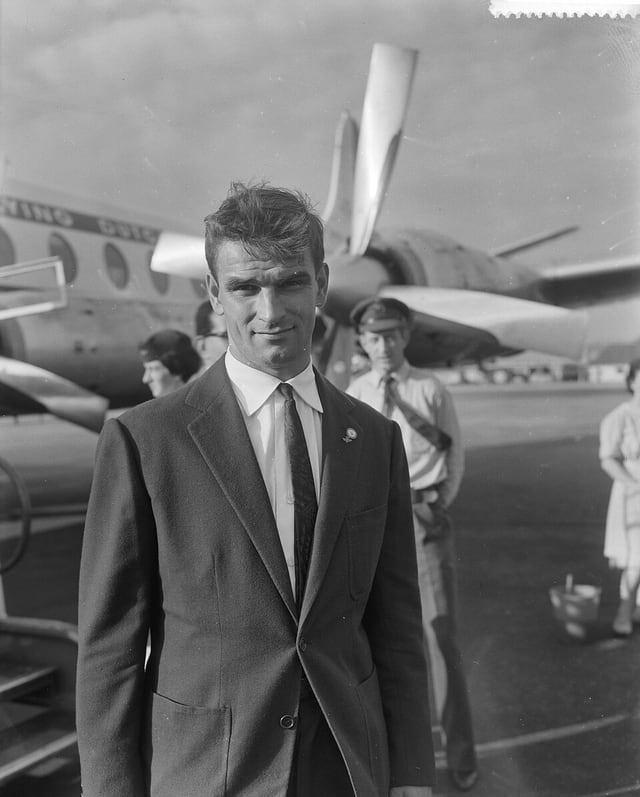
Summary
Kocsis scored eleven times before the 1954 final, then met the one match that gave him no goal and Hungary no title.
Quick facts
- Primary role
- Inside-forward and centre-forward
- Hungary
- 75 goals in 68 senior internationals
- 1954 World Cup
- 11 goals in five matches; Golden Boot and runner-up
- Honved league record
- 177 goals in 160 league matches
- Barcelona official record
- 82 goals in 126 official matches
- Profile
- Elite heading, two-footed finishing and sharp penalty-area timing
Eleven goals came before the match everyone remembers
Sándor Kocsis scored in Hungary’s first four matches at the 1954 World Cup. He put three past Korea Republic, four past West Germany, two past Brazil and two past Uruguay. The sequence carried him to eleven goals in five appearances and made him the tournament’s leading scorer.
Then came the final. Hungary led West Germany 2-0 after eight minutes, lost 3-2 and left Switzerland without the trophy they had been expected to win. Kocsis did not score. His tournament is therefore split by one hard line: eleven goals on the way to Bern, none in the game that decided how the team would be remembered.
That ending can swallow everything before it. It should not. Kocsis produced the second-highest single-edition total in men’s World Cup history, and he did it against three teams that reached at least the quarter-finals. Two huge group wins explain only part of the haul.
Budapest gave him two different football educations
Kocsis was born in Budapest on 21 September 1929. He joined Ferencváros as a teenager and made his senior debut during the 1945/46 season. The club gave him his first sustained partnership with a central striker: Ferenc Deák occupied defenders while Kocsis arrived from a slightly different line.
MLSZ records 70 league goals in 89 appearances for Ferencváros. He scored 33 in the 1948/49 championship season, when the team reached 140 goals in 30 league games. Those numbers came from a forward who could finish moves and help create them.
In 1950 he moved to Honvéd, where several leading Hungary internationals were being gathered. The change placed him beside Ferenc Puskás at club and national-team level. It also put him inside a team whose attacking movements could be repeated every week rather than assembled only for international camps.
Kocsis scored 177 goals in 160 league matches for Honvéd according to the Hungarian federation. He won four league titles with the club and reached 33 goals in 26 league matches in 1954. The World Cup explosion arrived during an already exceptional scoring year.
Golden Head was accurate, but incomplete
The nickname followed the most visible part of his game. Kocsis was a superb header of the ball. He did not simply jump higher than defenders and try to overpower them. He read the cross, changed his stride and met it where he could control the direction.
That distinction matters. A header back across goal needs different contact from a near-post flick. A floated delivery asks the forward to generate force; a fast cross asks him to take force away. Kocsis had the balance and neck control to solve all of those deliveries.
FIFA’s account of Hungary’s Golden Team also describes him as a complete striker who could hold the ball and finish with both feet. The footage supports that broader view. He could receive with a defender close, lay the ball off and move again. When a chance fell below head height, he did not look like a specialist waiting for the wrong service.
Hungary made the centre difficult to defend
The national team around Kocsis was not organised as a simple row of forwards. Nándor Hidegkuti dropped away from the defensive line and asked centre-backs whether they should follow. Puskás moved across the front and carried a threat from angles usually reserved for a creator. Kocsis attacked the spaces those decisions opened.
If a defender stepped toward Hidegkuti, Kocsis could run into the vacated channel. If the line stayed narrow, Hungary could pass around it and deliver from wider areas. The movement made individual marking uncomfortable because the supposed centre-forward was not always the player occupying the centre.
This was the team that won Olympic gold in 1952, beat England 6-3 at Wembley in 1953 and entered the 1954 World Cup on a long unbeaten run. Kocsis’s goals belonged to an extraordinary collective, but the collective still needed a forward to turn movement into finishes.
Three, then four, in the group stage
Hungary opened the World Cup with a 9-0 win over Korea Republic. Kocsis scored three. The opponent was overwhelmed, and using that match alone to judge him would tell us little about how the finishing held up under pressure.
The next game made the total stranger. Hungary beat West Germany 8-3, and Kocsis scored four. Germany had changed its lineup after winning its opener, but it was still the side Hungary would meet again in the final. Seven goals in two matches gave Kocsis a spectacular start without yet proving what he could do in the knockout rounds.
Those group scores also explain how Hungary reached 27 goals in five matches, still the men’s World Cup record for one team in a single edition. The tournament format sent the group winner straight to a quarter-final, so Kocsis had no round-of-16 match in which to add to the total.
Brazil turned the quarter-final into a fight
The quarter-final against Brazil bore little resemblance to the group games. It was physical, argumentative and later known as the Battle of Bern. Three players were sent off. Hungary played without the injured Puskás and could not rely on the same attacking rhythm.
Kocsis scored twice in a 4-2 win. The second came late enough to close the contest after Brazil had threatened a recovery. Reaching nine against that level of opponent changed the shape of his tournament. He was no longer only the scorer attached to two routs.
Uruguay presented the next problem. The defending champions came back from 2-0 down in the semi-final and forced extra time. Kocsis then scored two headed goals as Hungary won 4-2. Eleven had arrived through a hat-trick, a four-goal game and two knockout braces.
The final left no room for a tidy explanation
Puskás returned for the final and scored after six minutes. Zoltán Czibor added another two minutes later. The expected champion was already 2-0 ahead of an opponent it had beaten by five goals in the group.
West Germany equalised before the nineteenth minute, then defended with a discipline the first meeting had not required. Helmut Rahn made it 3-2 late in the second half. Hungary pushed for an equaliser, and a Puskás goal was disallowed for offside.
Kocsis did not find the finish that had rescued the semi-final. That is a fact, not a verdict on the previous four matches. A forward can own the tournament scoring record and still be held in the final. Football offers no rule that a hot streak must resolve the story cleanly.
Eleven in one edition is a different record from eleven in a career
The World Cup all-time scorers table places Kocsis on eleven alongside Jürgen Klinsmann and Cristiano Ronaldo. The identical total hides three different shapes.
Klinsmann scored across 1990, 1994 and 1998. Ronaldo spread his goals across several tournaments. Kocsis played five matches in one edition. His rate is the outlier, while their return trips provided the durability his international career could not.
Just Fontaine passed Kocsis four years later with thirteen in six matches. Gerd Müller scored ten in 1970 and fourteen across two World Cups. Those comparisons keep the categories separate: one-tournament concentration, total World Cup goals and the broader quality of a career are related, but they are not interchangeable.
Seventy-five goals in sixty-eight internationals
The Hungarian federation lists 75 goals in 68 senior matches for Kocsis. His international career ran from 1948 to October 1956 and ended while he was still twenty-seven.
The total matters because it removes the idea that Switzerland was a random month. Kocsis scored at an exceptional rate across eight years, including the Olympic title and the long unbeaten stretch that made Hungary the favourite in 1954.
He sits behind Puskás in Hungary’s historical scoring list, but their partnership should not be reduced to first and second. Puskás often received toward the left and shaped attacks with his passing and shooting. Kocsis gave the side another route: movement through the inside-right channel, aerial finishes and work against the centre-backs.
Barcelona came after a country was left behind
Honvéd was abroad for a European Cup tie when the 1956 Hungarian uprising changed the players’ choices. The team continued touring, and Kocsis eventually remained outside Hungary. After a brief spell with Young Fellows Zürich, he joined Barcelona in 1958 with help from compatriot László Kubala.
The move placed him in another gifted attack, this time alongside Kubala, Luis Suárez and Zoltán Czibor. Injuries reduced his availability, yet Barcelona’s archive still records 82 goals in 126 official matches. Larger career totals sometimes shown by the club include friendlies and other unofficial appearances; this page keeps the official competition line explicit.
Kocsis won La Liga in 1958/59 and 1959/60, two Spanish Cups and two Inter-Cities Fairs Cups. Barcelona also reached the 1961 European Cup final. Benfica won 3-2, giving Kocsis another major final in which a strong attacking side fell one goal short.
What remains when the arithmetic is removed
The numbers are difficult to ignore: 75 for Hungary, 177 league goals for Honvéd, 82 official goals for Barcelona and eleven at one World Cup. They still do not explain the pleasure of watching Kocsis meet a cross.
He seemed to begin the jump before the defender understood where the ball was going. The best headers were not wild collisions. They were measured contacts made while his body was moving in one direction and the ball was sent into another.
That skill made Golden Head a fair nickname. The two-footed finishing, link play and repeated movement made it an incomplete scouting report.
The empty final should stay in the story
There is no need to rescue Kocsis from the 1954 result. Hungary lost the final, and its leading scorer did not score in it. Removing that fact would make the profile less honest and the tournament less interesting.
The stronger reading keeps both sides. Kocsis produced eleven goals in four matches, including four against the eventual champion and two in each knockout game before the final. Then West Germany stopped him when the title was on the line.
One quiet match shaped the memory. The eleven before it remain one of the hardest scoring runs the World Cup has seen.
Sources
Sources checked
FAQ
How many goals did Sandor Kocsis score at the 1954 World Cup?
He scored 11 goals in five matches: three against Korea Republic, four against West Germany, two against Brazil and two against Uruguay.
How many goals did Sandor Kocsis score for Hungary?
The Hungarian Football Federation records 75 goals in 68 senior internationals between 1948 and 1956.
Why was Sandor Kocsis called Golden Head?
The nickname came from his exceptional heading. He judged the flight early, jumped with strong timing and could redirect crosses rather than merely power them.
How many official goals did Sandor Kocsis score for Barcelona?
Barcelona's player archive lists 82 goals in 126 official matches. Larger totals sometimes quoted for him include unofficial games.
Did Sandor Kocsis win the World Cup?
No. Hungary reached the 1954 final but lost 3-2 to West Germany after leading 2-0. Kocsis finished as the tournament's top scorer.