
player
Just Fontaine: Thirteen Goals in One World Cup
Just Fontaine's career with France, Nice and Reims, the movement behind his 13 goals at the 1958 World Cup and the injury that ended it early.
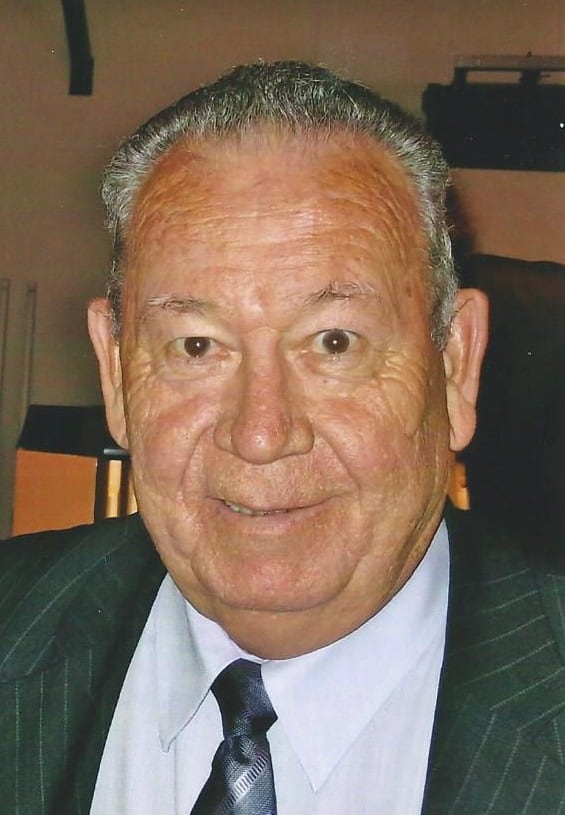
Summary
Fontaine did not build the record through one type of finish; he kept reaching the next space before tired defenders could reorganise.
Quick facts
- Primary role
- Centre-forward
- World Cup record
- 13 goals in six matches at Sweden 1958
- France
- 30 goals in 21 matches in the official FFF record
- Main clubs
- OGC Nice and Stade de Reims
- French league
- Four titles; top scorer in 1957/58 and 1959/60
- Profile
- Fast first steps, two-footed finishing and repeated runs across the box
A record built in six different matches
Just Fontaine scored in every game France played at the 1958 World Cup. Thirteen goals in six matches can sound like one hot streak with a few easy afternoons buried inside it. The match list says otherwise.
He scored three against Paraguay, two against Yugoslavia, one against Scotland, two against Northern Ireland, one against Brazil and four against West Germany. France won four of those matches, lost two and finished third. Fontaine kept scoring as the opponents and match states changed.
The record survives because no later tournament has given one player the same mix of finishing, opportunity and fitness. Sándor Kocsis scored eleven in 1954, Gerd Muller ten in 1970, and several players have reached eight or nine. Nobody has reached thirteen again.
Marrakech and Casablanca came before France
Fontaine was born in Marrakech on 18 August 1933. His father was French and his mother Spanish, and his first senior football came with USM Casablanca. The club won the Moroccan championship and North African championship in 1952.
That beginning matters because Fontaine did not emerge from the French academy route later associated with elite internationals. He learned senior football in Morocco, then moved to OGC Nice at twenty.
Nice gave him a place in the French top division and immediate honours. He won the Coupe de France in 1954 and the league in 1956. The goals attracted Stade de Reims, then the strongest French club and one of Europe’s best organised attacking sides.
Reims supplied movement around the scorer
Fontaine joined Reims in 1956. Albert Batteux coached a team that moved the ball quickly and gave forwards several possible receivers rather than one fixed target. Raymond Kopa could carry or pass from deeper positions. Jean Vincent and Roger Piantoni changed the angle of attacks. Fontaine completed moves without having to stand still and wait for service.
His first step was quick, but the useful quality was timing. He might begin close to a centre-back, pause as a teammate received and then run across the defender’s front shoulder. If the pass went wide, he did not remain beside the penalty spot. He adjusted toward the near post or dropped into the lane for a cutback.
Reims won the league and French Cup in 1957/58. Fontaine scored 34 league goals and finished as the division’s leading scorer. That domestic season set the stage for Sweden; the World Cup did not appear from nowhere.
He was not certain to start in Sweden
Fontaine reached the 1958 tournament with only a small international record behind him. Injuries elsewhere in the squad helped open the centre-forward position. He did not even travel with a stock of boots fit for a guaranteed starter.
The pair he brought failed before the tournament. Reserve forward Stephane Bruey lent Fontaine another pair in the same size. The story has become part of the record’s folklore, but the boots did not make the runs. They merely allowed the selected striker to play.
France’s opening match against Paraguay became a 7-3 win. Fontaine scored three. The first game removed any doubt about his place and showed the basic pattern: France could concede, the match could stretch, and their centre-forward would keep moving through the open spaces.
Six group-stage goals did not require three wins
Fontaine scored twice against Yugoslavia in the second match, yet France lost 3-2. He then scored the winner against Scotland in a 2-1 victory. The group-stage total stood at six.
That sequence is useful because it separates individual scoring from a simple team-dominance argument. France created plenty, but Fontaine also scored while chasing a game and while protecting a narrow lead. His tournament was not a series of goals added after matches were settled.
The early finishing helped. Fontaine did not need to carry the ball until the angle looked perfect. He could shoot from the first controllable touch, use either foot and change the height of the finish when the goalkeeper set low.
Northern Ireland gave him two more
France beat Northern Ireland 4-0 in the quarter-final. Fontaine scored twice and moved to eight for the tournament. By then, the record chase had become visible, but France still had a semi-final against Brazil ahead.
The partnership with Kopa gave the attack its balance. Kopa drew attention between midfield and defence, where a marker had to decide whether to step forward. Fontaine watched that decision. If the centre-back followed Kopa, the striker could attack the vacant lane. If the defender stayed, Kopa could turn and choose the pass.
This is why the goals should not be described as poaching alone. Fontaine finished close to goal, but the route depended on reading teammates and defenders before the ball entered the box.
Brazil stopped France, not Fontaine
Fontaine scored against Brazil in the semi-final to make it 1-1. France later lost centre-back Robert Jonquet to a broken leg and, with substitutions not permitted, played on at a severe disadvantage. Brazil won 5-2 as seventeen-year-old Pele scored a hat trick.
The defeat placed Fontaine inside another player’s arrival. Pele left Sweden as a world champion and the tournament’s defining young star. Fontaine left the semi-final on nine goals, short of the final but still with the third-place match to play.
Those stories do not compete cleanly. Pele’s tournament changed the idea of what a teenage forward could do. Fontaine’s changed the single-edition scoring ceiling.
Four goals completed the record
France beat defending champions West Germany 6-3 in the third-place match. Fontaine scored four. His tournament total moved from nine to thirteen in ninety minutes.
The opponent and occasion matter. This was not a friendly added after elimination; bronze medals and France’s best World Cup finish to that date were at stake. West Germany had won the tournament four years earlier.
Fontaine’s four goals also completed a rare distribution. He had scored a hat trick, two separate braces, two single goals and then a four-goal match. The record was not dependent on one extraordinary mismatch. It grew in every round.
Thirteen in one tournament versus careers across four
The World Cup all-time scorers table places Fontaine behind players whose totals came across several editions. Miroslav Klose reached sixteen across four tournaments. Ronaldo Nazario scored fifteen across three active World Cups, and Gerd Muller reached fourteen in two.
Fontaine’s thirteen came from one entry. That gives the line unmatched concentration but less evidence of repeat tournament performance. He ranks seventh in the current table because it is ordered by total goals first. The profile explains why seventh still contains a record none of the six above him owns.
Modern tournament expansion does not automatically make thirteen easier. More possible matches help, but knockout football remains unforgiving. A scorer still needs fitness, service and enough team progress to stay on the field into the final weekend.
France’s official total is thirty, not a blended number
The French Football Federation records 30 goals in 21 senior matches. Its match list includes the 1953 game against Luxembourg in which Fontaine scored three, a fixture whose classification changed in later record keeping.
Some FIFA retrospectives state 31 goals in 21 appearances. This page does not combine those sources into a compromise. It uses the federation’s current match-by-match record: 21 starts, 1,889 minutes and 30 goals.
The distinction does not weaken the international case. Thirty goals in twenty-one matches remains an exceptional rate, and thirteen of them belong to the World Cup record. The note simply keeps readers from seeing two official-looking totals and assuming one is a typo.
Reims reached another European Cup final
Fontaine’s scoring continued after Sweden. Reims reached the 1959 European Cup final, and he led the competition with 10 goals. Real Madrid won the final 2-0, taking a fourth consecutive title.
The loss places Fontaine near the first great European dynasty without giving him a medal he did not win. Alfredo Di Stefano and Madrid owned the final. Fontaine owned the tournament scoring lead.
Reims won more French league titles in 1960 and 1962. Fontaine also led Division 1 with 28 goals in 1959/60. His club career was more than a platform for one summer, even if the World Cup inevitably dominates the memory.
The leg fracture shortened the evidence
A broken leg in 1960 interrupted Fontaine near his peak. Further trouble followed, and he ended his playing career in 1962 at twenty-nine. The FFF records 164 goals in 200 domestic matches, including 152 in 145 for Reims.
An early ending changes how the record is read. Fontaine did not fail to reproduce thirteen at later World Cups; he never received another healthy tournament opportunity. That does not justify adding imaginary goals. It explains why the career and tournament sample are both unusually compressed.
After playing, Fontaine helped establish the French professional players’ union, coached France briefly and later took Paris Saint-Germain into the top division. He also managed Toulouse and Morocco. Those roles extended his place in French football beyond a six-match summer.
What the finishes looked like
Fontaine could finish with either foot and did not require a large backswing. That mattered on uneven, crowded penalty areas where a second setup touch invited a tackle. He used the pace of the pass, redirected the ball or lifted it when the goalkeeper dropped early.
His runs were repetitive in a productive way. Cross the defender, check the goalkeeper, arrive. If the first pass did not come, he reset rather than drifting out of the attack. Tired defenders had to make the same decision again.
The record belongs to those repeated actions more than to borrowed boots or historical mystique. Six matches gave Fontaine six different problems. He found a scoring answer in every one.
Why the thirteen still stand apart
All-time totals reward return visits. Single-tournament records reward a player who reaches peak form at exactly the right month and whose team survives long enough to use it. Fontaine’s 1958 run is the most extreme example.
Kylian Mbappe and other modern scorers may eventually move far beyond thirteen in career World Cup goals. They still need a separate argument to touch this record. Thirteen in one edition asks for scoring in the group, the knockouts and the final weekend without one quiet match.
Fontaine did that once because once was all the World Cup gave him.
Sources
Sources checked
FAQ
How many goals did Just Fontaine score at the 1958 World Cup?
He scored 13 goals in six matches, still the record for one men's World Cup tournament.
Did Just Fontaine play at any other World Cup?
No. Sweden 1958 was his only World Cup finals appearance. A broken leg in 1960 and later complications ended his playing career in 1962.
How many goals did Just Fontaine score for France?
The French Football Federation records 30 goals in 21 senior internationals. Some international retrospectives publish 31, so this page keeps the federation's match-by-match total.
Which clubs did Just Fontaine play for?
He played for USM Casablanca, OGC Nice and Stade de Reims. His most successful European period came with Reims.
Did Just Fontaine win the European Cup?
No. He was the competition's leading scorer with 10 goals in 1958/59, but Reims lost the final 2-0 to Real Madrid.